


























Credit: Shutterstock
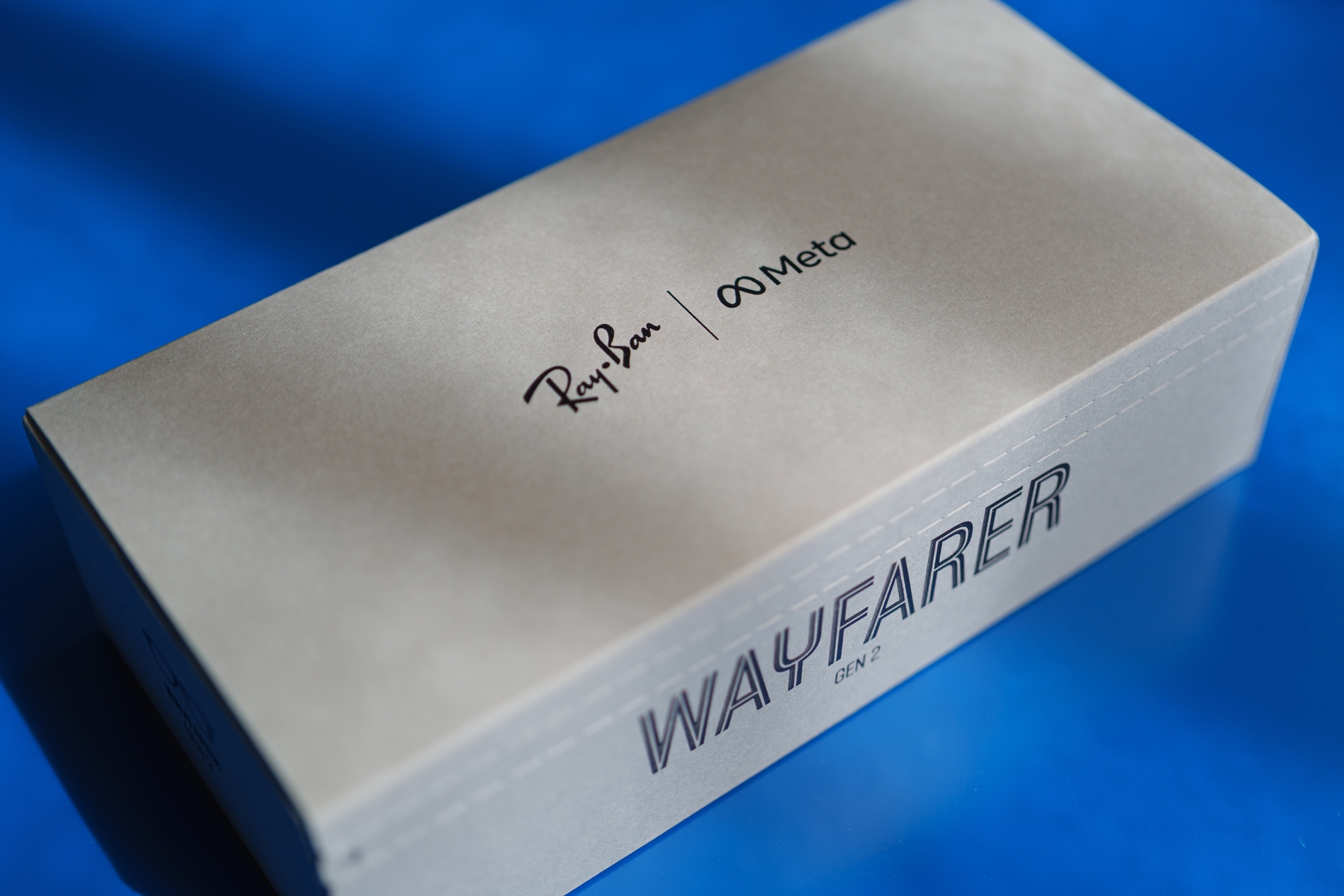
The Ray-Ban Meta Wayfarer Gen 2 is the best pair of smart glasses available today, but with privacy trade-offs.
I have worn the Ray-Ban Meta Wayfarer Gen 2 as my everyday pair of glasses for several weeks now, and I want to walk you through everything I have found good and bad about them.
These are Meta’s 2nd generation smart glasses, built into a classic Wayfarer frame through Meta’s partnership with EssilorLuxottica, the company that owns Ray-Ban. They look like a regular pair of sunglasses, but they hide a camera, a pair of speakers, and Meta’s AI assistant inside the frame.
This review covers what it is actually like to wear these glasses every day, not just what Meta says about them.
Quick facts
- Price: starts at $379 for the Wayfarer with standard lenses
- Battery: up to 8 hours of moderate use and 48 additional hours from the charging case
- Camera: 12-megapixel photos, video up to 3K resolution at 30 frames per second
- Weight: about 48 grams
- Water resistance: IPX4, meaning splash-resistant but not built for swimming
- Storage: 32GB built into the frame
Design and Comfort
The first thing I noticed is that these glasses do not look any different from the original Wayfarer model. Meta kept the exact same shape, and the only way to tell the two generations apart is a small “(gen 2)” mark printed inside the temple. I like this. A lot of wearable technology looks like wearable technology, but the Meta Wayfarer Gen 2 still looks like a normal pair of Ray-Bans.
It weighs 48 grams. Even so, these are heavier than a normal pair of sunglasses, and I notice them on my nose after several hours, especially in the standard size. If your face is narrower or wider than average, try them on in a store before buying, since the fit between the standard and large sizes makes a noticeable difference in comfort.
The Ray-Ban Meta Wayfarer Gen 2 comes in several frame and lens combinations, including matte black and shiny black, along with a few seasonal colors. You can choose clear, polarized, or Transitions lenses, which turn dark outdoors and clear again indoors.
If the Wayfarer shape is not for you, Meta sells this same generation of hardware in the Headliner and Skyler frames as well, each with its own color options.
The Wayfarer frame carries an IPX4 rating, so it can handle light rain or sweat but is not meant for swimming. Build quality has held up well for me so far. Still, I have read accounts from other owners describing a hinge or temple coming loose earlier than expected. This doesn’t appear to be a widespread issue. EssilorLuxottica covers manufacturing defects for 12 months, so please keep your receipt.
Camera and Video Quality
The camera uses a 12-megapixel ultra-wide sensor, and the photo resolution has not changed since the 1st generation. Photos come out at 3024 by 4032 pixels. What did change is video. The Ray-Ban Meta Wayfarer Gen 2 can record at 3K resolution, up from 1080p on the 1st Gen, and it also offers modes up to 60 frames per second at a lower resolution. Also, recording is capped at about 3 minutes per clip.
In daylight, photos and video look clear enough to share right away. Indoors or in low light, I see more noise and less detail, and colors look flatter than what my phone captures. Photos also show some distortion near the edges of the frame, which is more noticeable in shots with straight lines like doorways or buildings. None of this is surprising. A small camera sensor built into a glasses frame is not going to outperform a modern phone camera, and it does not need to. What it offers instead is speed. I can take a photo or start recording with a voice command or a press of the button on the temple, without pulling out my phone or looking away from whatever I am watching. That is the actual selling point, not image quality.
There is no screen or viewfinder, so I cannot see what I am about to capture before I take it. I have ended up with plenty of photos framed differently than I expected because of this. The Meta AI app also includes a few AI editing tools for photos I import to my phone, letting me restyle or edit an image by describing the change instead of using sliders. I use this occasionally, but it is a nice extra rather than a core reason to buy the glasses.
Battery Life
Battery life is the single biggest upgrade in this generation, and it is not a small one. Meta rates the Gen 2 for up to 8 hours of moderate use, twice the 4 hours claimed for the Gen 1. In my daily use (music, some photos, a handful of voice commands, and an occasional short video), I get through a full workday on one charge.
Heavier use drains the battery faster. When I record several video clips back to back and keep music playing at a high volume, I have seen the battery level drop close to 20% in an hour. Live AI, the mode that keeps the camera running so the assistant can comment on what you are looking at in real time, is still the most demanding feature. Its run time roughly doubled compared to the first generation, but it still drains a full charge faster than any other single feature.
Charging is fast when I need it to be. 20 minutes in the case brings the glasses to about 50%, enough to get me through an evening if I forgot to charge overnight. The case itself can recharge the glasses several times before it needs a plug, adding up to 48 hours of extra use in total, up from 32 hours on the original case.
Audio and Calls
Sound comes from small open-ear speakers built into the temples, paired with a five-microphone array for calls and voice commands. For music and podcasts, the quality is good enough. Bass is present but limited, and I would not compare it to a good pair of headphones. In a quiet room, other people cannot hear my music at low to medium volume.
Calls sound clear on both ends in my experience, and the biggest advantage is that I keep full awareness of my surroundings since nothing covers my ears. This makes the Ray-Ban Meta Wayfarer Gen 2 practical for walking around a city, though I would still keep full attention on the road while driving rather than relying on any hands-free device.
Conversation Focus is a newer feature that tries to isolate the voice of the person in front of me and reduce background noise. It works, but the controls are limited to a few basic settings rather than fine adjustment, so do not expect the kind of customization you would get from a hearing aid or premium headphones. Live translation is another feature I have used and liked, though running it continuously uses noticeably more battery than normal listening.
Meta AI and the Software Experience
Every AI feature runs through the Meta AI app on your phone and the “Hey Meta” wake phrase on the glasses themselves. I use this daily to ask questions about what I am looking at, get quick facts, send messages, or start music without touching my phone. It works well for simple requests. It struggles more with anything specific or unusual.
I have had it misidentify objects, give a confident but wrong answer, or not understand a request phrased outside its expected patterns. Other reviewers have reported the same thing, and it is a fair trade-off given how new this category of product still is.
Meta has kept adding features to Ray-Ban Meta Wayfarer Gen 2 since launch, including slow motion and hyperlapse video, fitness tracking integration with Garmin, and message summaries, among others. This matters if you are deciding between generations, since most software improvements reach both the first and second generation glasses. The processor inside the Gen 2 is the same chip used in the original model, so these updates come from software, not new hardware.
Final Verdict
If you already own the first-generation Ray-Ban Meta glasses, there is no urgent need to upgrade. Most of the experience is the same, and the biggest improvements in Gen 2 are better battery life, improved video quality, and a slightly lighter design. Those upgrades are most valuable if you wear the glasses all day or record videos often.
For first-time buyers, the Gen 2 is the better choice starting at $379, with prices increasing for different frames, lenses, or prescription options. It costs only a little more than the original but offers much better battery life and noticeably better cameras.
If the Ray-Ban style is not important to you, Meta also offers similar smart glasses under its own brand for a lower price. There are also Oakley Meta models designed for sports and outdoor use. And if you are not in a hurry, it may be worth waiting to see what Meta announces at its expected September 2026 Connect event.
These glasses are best for people who want to capture hands-free photos and videos, use a voice assistant throughout the day, or create content while traveling. If your top priority is image quality, a modern smartphone will still produce much better photos and videos. Privacy is also something to think about before buying.