





























Credit: Shutterstock
Sony has set an expiration date for physical PlayStation games, and the fallout is only just beginning.
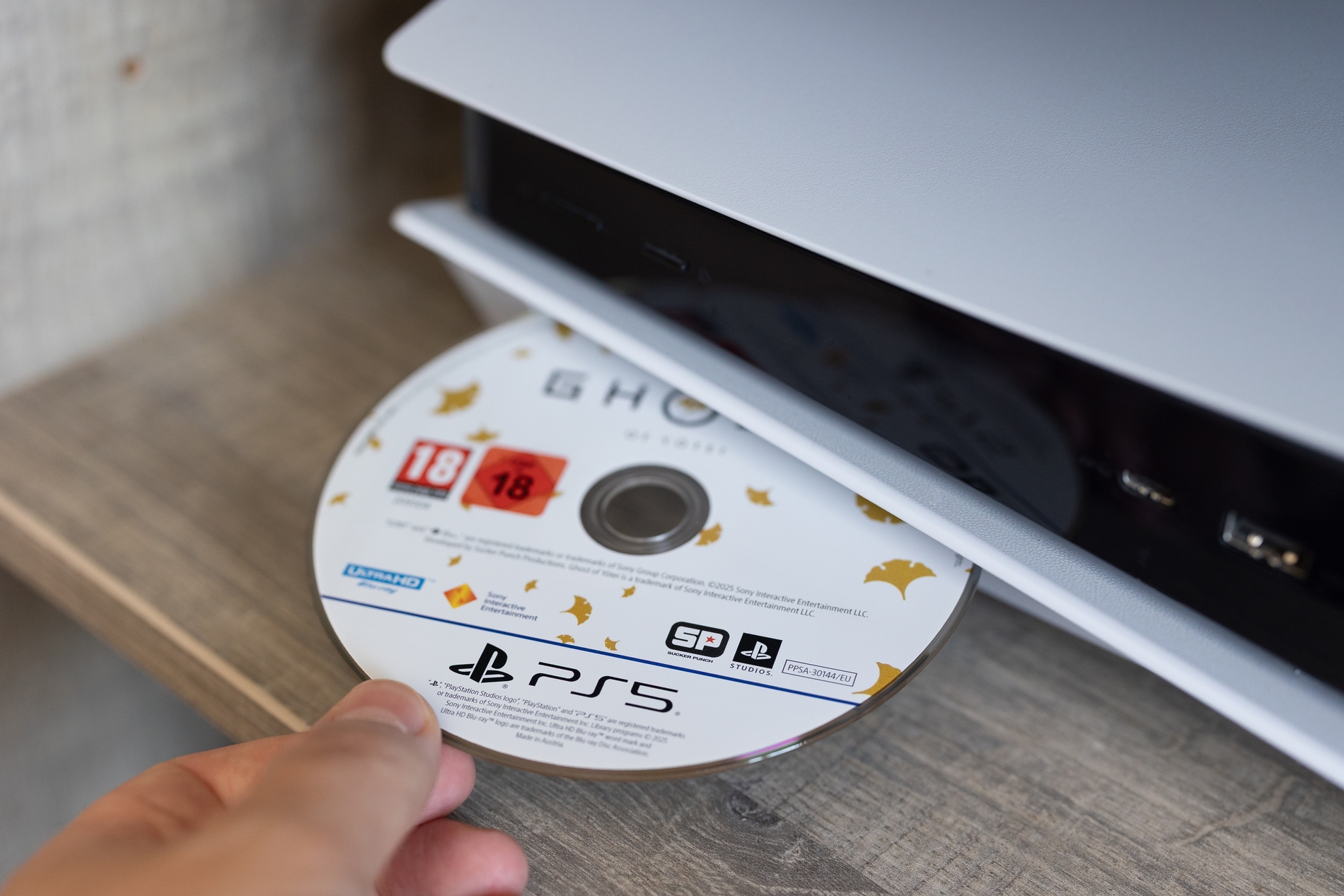
Earlier this month, Sony confirmed it will stop producing physical discs for all new PlayStation games starting in January 2028. After that date, every new release will be sold only in digital form, either through the PlayStation Store or as a boxed copy containing only a download code.
The announcement has sparked a large and ongoing backlash from players, retailers, and industry analysts, many of whom argue Sony is breaking a promise it made to gamers more than a decade ago.
Sony is also closing PlayStation Store access on PS3 and PS Vita in most countries starting July 2027.
Why Now
Sony framed the decision as a simple response to how people already buy games. In its announcement, the company called it a “natural direction for Sony Interactive Entertainment to adapt to consumer trends,” citing its own sales figures as evidence.
According to Sony’s financial results for the fourth quarter of fiscal year 2025, digital downloads accounted for 85% of full-game software sales on PS4 and PS5, with physical copies accounting for the remaining 15%.
That shift has been building for years. Sony’s PS5 Pro launched in 2024 without a disc drive, and Xbox has been steering players toward digital purchases for even longer. Even so, the size and permanence of Sony’s announcement caught much of the industry off guard.
Sony’s announcement came just days after Rockstar Games confirmed that Grand Theft Auto VI, one of the most anticipated releases in gaming history, will not ship on disc either.
For a game expected to be the biggest launch of the year, if not the decade, the decision to skip a disc entirely struck many fans as a warning sign for where the rest of the industry was heading. Sony’s news a few days later confirmed it.
A large number of fans are pushing back
The response from players has been fast and sizable. A Change.org petition titled “Don’t Kill the Disc,” started by Jade Pearce, CEO of Canadian retailer PNP Games, launched within a day of Sony’s announcement. It passed 100,000 signatures in four days, crossed 250,000 by July 9, and has since climbed past 335,000, closing in on 350,000 by late July.
The petition argues that ending physical media removes consumer choice and threatens jobs across retailers, distributors, and the collector community, arguing in part, “A disc is a real game you own.”
Sony has not publicly responded to the petition beyond its original announcement.
The resale market takes a hit
The most concrete economic impact may land on the second-hand gaming market.
Research firm Dataintelo estimated the global market for pre-owned games, consoles, accessories, and peripherals was worth $7.2 billion in 2025, with growth projected to reach $13.8 billion by 2034. That forecast assumed a steady supply of new physical games entering circulation. Sony’s decision does not erase existing physical games overnight, since older titles will still be tradeable. Still, it does cut off the pipeline of new disc-based games after 2028, which analysts expect to shrink the resale market over time rather than end it immediately.
Michael Pachter, managing director at Wedbush Securities, said the move will save Sony money but warned that “the consumer pays the tax in terms of less optionality.” Unlike a disc, a download code cannot be resold, lent, or traded in, and Pachter noted that historically, roughly a third of games have sold as used copies, with trade-in credit often funding purchases of new titles. Ito, of Morningstar, expects the resale market for games to keep shrinking and eventually disappear as new physical stock dries up.
History repeating itself in reverse
The backlash has focused heavily on the irony of Sony’s position.
In 2013, PlayStation built a reputation as the consumer-friendly console maker by mocking Xbox’s restrictive game-sharing rules. In a widely shared video, Sony executive Shuhei Yoshida handed a disc to a colleague to demonstrate how easy it could be to share a game.
At the same year’s E3 conference, then-Sony Computer Entertainment America CEO Jack Tretton told a cheering crowd that buyers could trade in, lend, sell, or “keep it forever.”
Thirteen years later, critics say Sony has become the company it once ridiculed. Kazunori Ito, director of equity research at Morningstar, called the situation “a truly ironic turn of events,” noting that Sony had built goodwill in 2013 by presenting discs as the simple, consumer-friendly option.
What Next?
Sony appears committed to the timeline. Its last remaining disc-manufacturing plant for PlayStation games, located in Thalgau, Austria, is already being converted to produce optical microlenses for industries like automotive lighting. The plant currently produces around 600,000 discs a day, roughly half of them PlayStation titles, but that output is expected to fall to about 10% of current levels by 2028 as the shift takes hold.
The decision also has implications beyond discs. Analysts have pointed out that the timeline effectively rules out an early launch for Sony’s next console. Piers Harding-Rolls, senior games research analyst at Ampere Analysis, said the move “pretty much guarantees that PS6 won’t arrive until 2028 at the earliest.”
For now, Sony shows no public sign of reconsidering. The bigger question, raised repeatedly by analysts and players alike, is not whether digital gaming will keep growing. It clearly is. It’s whether players should choose that shift themselves or have it made for them.