




























Credit: Shutterstock
Google is about to test whether powerful AI chips can operate in space.
Google is preparing for the first orbital test of Project Suncatcher, a research effort that explores whether large-scale AI computing could eventually move into space.
The first satellite is scheduled to launch on October 1, 2026, aboard SpaceX’s Transporter-18 rideshare mission on a Falcon 9 rocket. SpaceX currently plans to launch the mission from Vandenberg Space Force Base in California.
This is an important distinction: Google is not launching a full data center into space.
The company is launching a prototype satellite to test whether powerful AI hardware used in data centers on Earth can survive and operate in space.
What is Project Suncatcher?
Google announced Project Suncatcher in November 2025 as a long-term research project to put AI computing infrastructure in orbit.
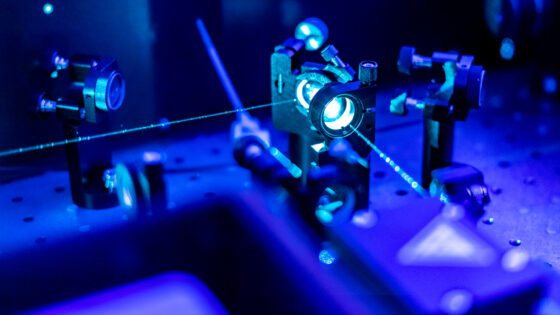
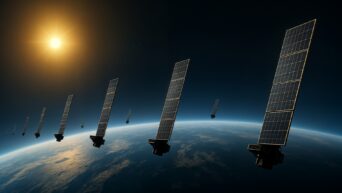
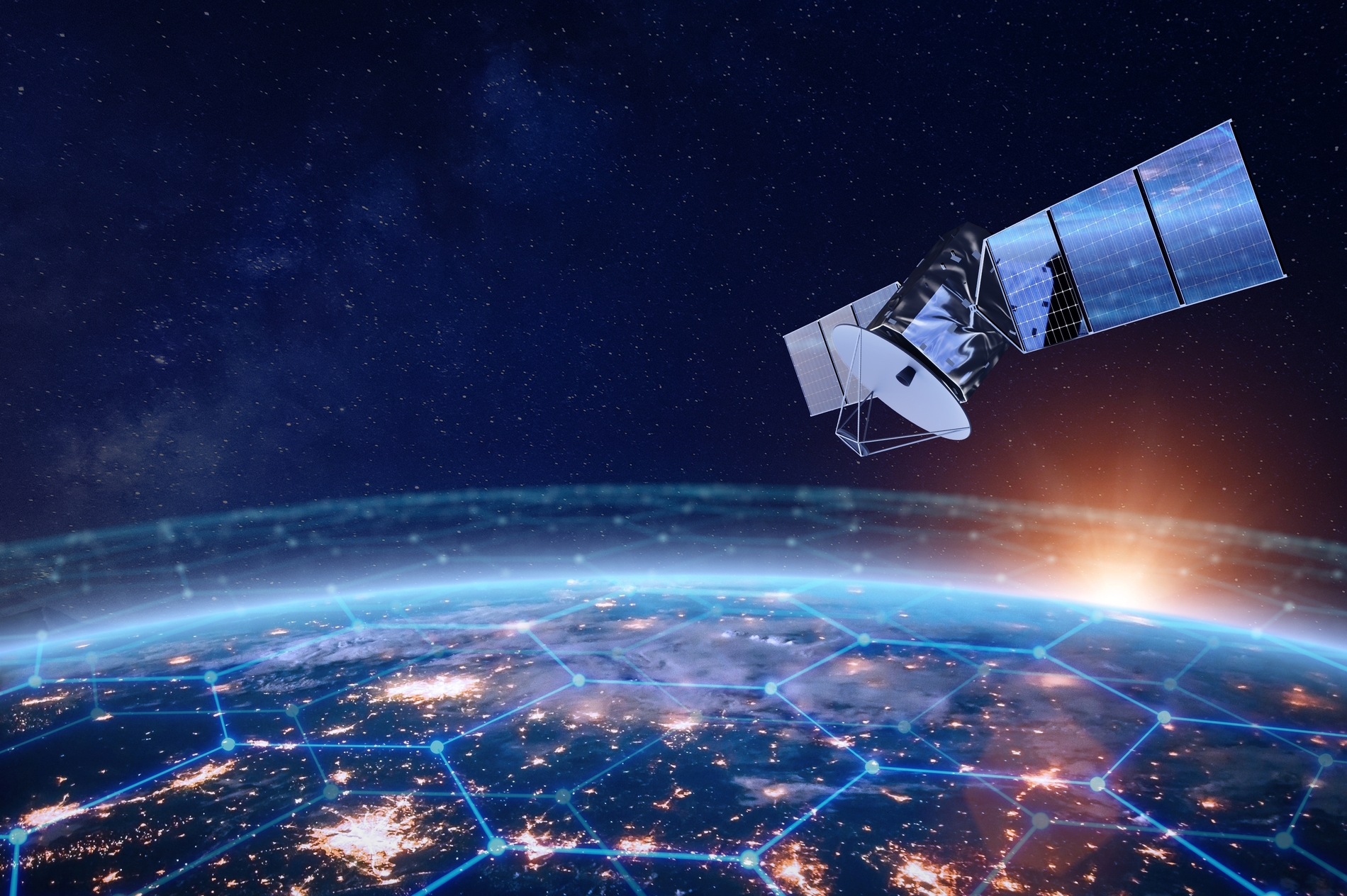
The concept is to create clusters of solar-powered satellites containing Google Tensor Processing Units, or TPUs. The satellites would communicate with one another through high-speed optical links using lasers. Together, they could potentially function as a distributed computing system in space.
The prototype satellite scheduled to launch on October 1 is the first real orbital test.
Developed with satellite company Planet, the prototype will fly on SpaceX’s Transporter-18 mission and collect data on how Google’s hardware responds to gravitational forces, radiation, vacuum, and extreme temperatures in space.
The prototype contains four Google TPUs. It is roughly the size of a refrigerator and has one kilowatt of solar panels to produce its own electricity. Google plans to run Gemini workloads on the chips during the experiment.
Why put AI computers in space?
Modern AI systems require enormous computing infrastructure and large amounts of electricity. Google plans to use abundant sunlight in space as an energy source.
Google chose an orbit for Project Suncatcher that can provide continuous sunlight to the solar panels on the satellite. Google Research estimates that, under the right conditions, a solar panel in orbit could be up to 8x more productive than one on Earth because it can receive sunlight much more often.
The long-term concept is therefore relatively simple:
- Solar panels would generate electricity in orbit.
- TPUs would use that electricity for AI computation.
- Multiple satellites would split large computing jobs among themselves.
- Laser communication systems would move data between the satellites at very high speeds.
In theory, this could let future computing infrastructure use abundant solar energy without requiring the same amount of terrestrial land, electrical infrastructure, and local cooling resources.
But turning that idea into a practical data center in space is extremely difficult.
1. The first major problem is heat
Space is cold, but cooling computers in space is not easy.
On Earth, computers can transfer heat into surrounding air, or liquid-cooling systems connected to larger cooling infrastructure take that heat away. Space is a vacuum so no surrounding air can carry heat away through convection.
A spacecraft must move heat away from its processors and eventually release it as infrared radiation.
Google is testing a system that uses heat pipes and radiators to handle the heat produced by its TPUs. The company has already tested the equipment inside a thermal-vacuum chamber on Earth. On October 1, they will see how the system behaves in the real space environment.
2. Radiation is another problem
Computer chips on Earth are protected by the planet’s atmosphere and magnetic environment from much of the radiation encountered in space.
Satellites do not have the same protection. High-energy particles can damage electronics or cause temporary errors by changing information stored inside a chip.
Google tested its Trillium TPUs using a proton beam at the Crocker Nuclear Laboratory at the University of California, Davis. According to Google, its ground testing indicated that the chips could withstand a total radiation dose greater than what the company expects them to receive during a 5-year space mission.
3. Google also needs extremely fast satellite-to-satellite connections
A modern AI data center does not depend on a single processor. Thousands of processors can work together and exchange enormous quantities of data.
Google would need to reproduce something similar in space. Its proposed solution is laser communication.
Google Research says a future orbital system could require satellite-to-satellite links operating at tens of terabits per second. In lab testing, Google has already demonstrated an optical connection reaching 800 gigabits per second in each direction, or 1.6 terabits per second combined, using a single transceiver pair.
Achieving data-center-scale performance would require satellites to fly unusually close to one another while maintaining precisely controlled positions.
Google’s models have studied configurations in which only hundreds of meters could separate satellites. That makes orbital mechanics and collision avoidance important parts of the computing problem.
The next major test is planned for 2027
Google says it plans to put two satellites into orbit in 2027 to test high-bandwidth laser communication between them. Future satellite designs could carry dozens of TPUs each.
That test would address whether multiple computing satellites can communicate quickly and accurately enough to work together on demanding AI workloads.
Even if that succeeds, a few more major challenges would remain, such as:
- Moving data efficiently between Earth and orbit
- Maintaining and replacing hardware that cannot be serviced as easily as equipment on Earth
- Reducing launch and spacecraft costs enough to make the system economically viable
Google’s research does not claim these problems are solved. Instead, Project Suncatcher is investigating whether they can be solved.