
























Credit: Shutterstock
We Wore Them, Tested Them, and Ranked Them So You Know Exactly Which Pair Is Worth Your Money
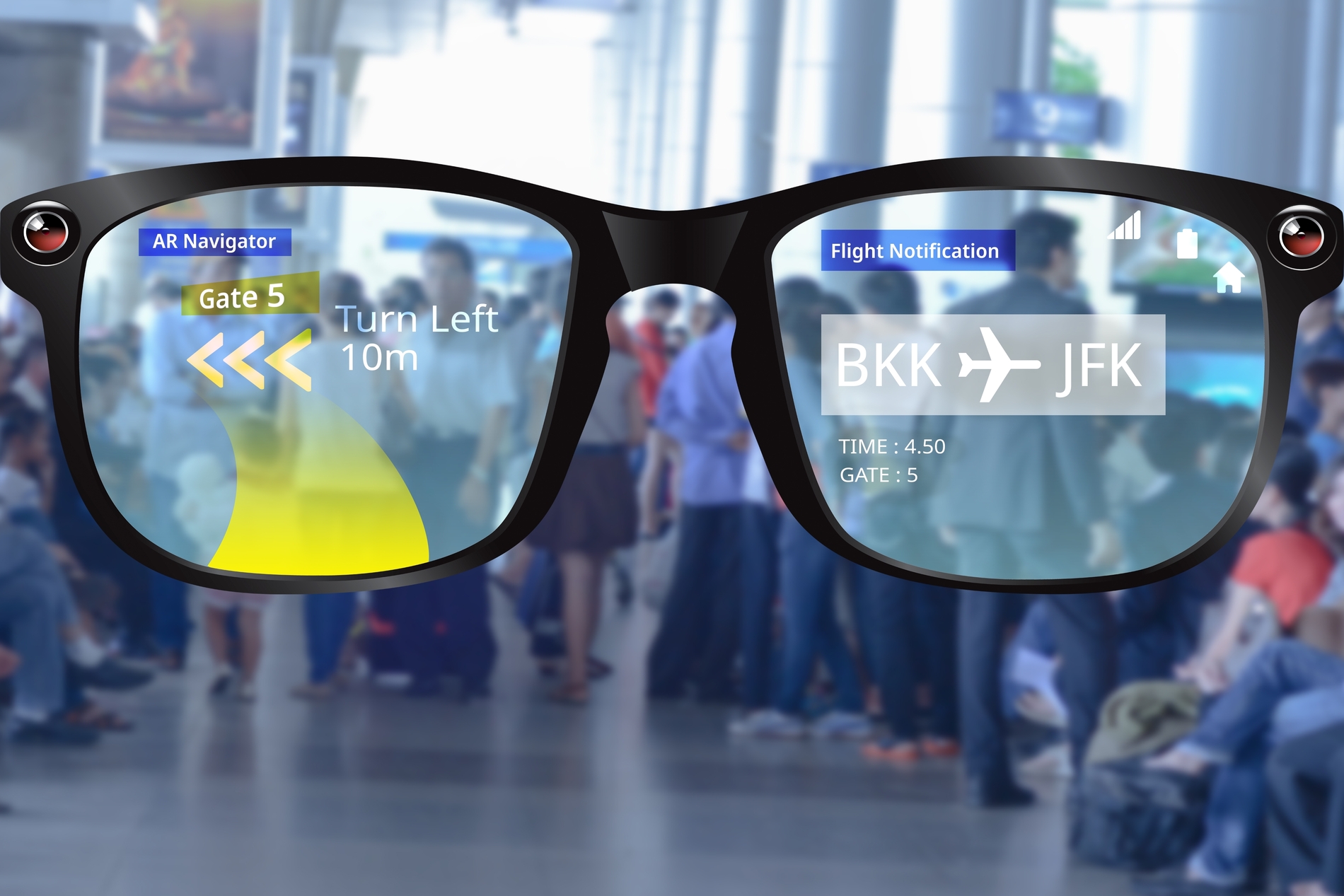
It is 2026, and smart glasses have quietly gone from a gimmick to a genuine everyday device. They are sleeker, smarter, and more useful than ever before. We spent weeks testing the latest models on commutes, at desks, and on weekend trips to give you the most honest take possible. Here are the five best pairs that actually earned a spot on our faces.
1. XReal One Pro: Best High-Tech AR Glasses
Price: $649 | Rating: 4.0/5 | Editors’ Choice
The XReal One Pro is the most advanced AR glasses you can buy today, and it earned our Editors’ Choice without much debate. The field of view is a massive 57 degrees, making the virtual display feel genuinely immersive rather than cramped. The picture is bright, sharp, and colorful, holding up well even in well-lit rooms. Built-in 3DOF tracking keeps content anchored as you move, and a 6DOF upgrade is available through an optional camera accessory. Dimmable lenses and a unique side view mode add real everyday value. The only sticking points are the steep $649 price and the lack of focus dials for prescription users.
Pros: Widest field of view available, bright and colorful display, built-in 3DOF tracking, dimmable lenses, unique side view mode.
Cons: Expensive, no focus dials.
2. RayNeo Air 3s Pro: Best Affordable AR Glasses
Price: $299 | Rating: 4.0/5 | Editors’ Choice
At just $299, the RayNeo Air 3s Pro delivers a bright, vibrant AR display that honestly feels like it should cost more. Multiple color balance modes let you tune the picture to your taste, and the audio is clear and full-sounding. People with mild nearsightedness may not even need prescription lens inserts, which is a thoughtful bonus. The field of view is 46 degrees, narrower than the XReal but comfortable for daily use. There are no focus dials, and the spatial audio mode underwhelmed us. Still, for the price, this is an exceptional value and a deserving Editors’ Choice winner.
Pros: Affordable, bright vibrant display, multiple color modes, clear full audio, mild myopia may not need inserts.
Cons: Modest field of view, no focus dials, spatial audio mode is disappointing.
3. Oakley Meta HSTN: Best for Social Media and Music
Price: $399 | Rating: 4.0/5
Not everyone needs an AR display. Some people just want great-looking glasses that shoot solid video and sound good doing it. The Oakley Meta HSTN delivers 3K video recording, impressive battery life that outlasts the standard Ray-Ban Meta models, and clear audio with minimal sound leakage. The built-in Meta AI assistant handles quick queries well, though it does slip up occasionally. The main frustrations are framing shots without a viewfinder and limited bass on audio playback. For content creators and music lovers, though, this is the pick.
Pros: 3K video, longer battery life, helpful AI assistant, minimal sound leakage, clear audio.
Cons: Difficult to frame shots, limited bass, AI assistant can make errors.
4. Ray-Ban Meta Gen 2: Most Stylish Camera Glasses
Price: $379 | Rating: 4.0/5
The Ray-Ban Meta Gen 2 is the pair you would wear even if they did nothing smart. The classic Ray-Ban design means nobody around you knows you are wearing a camera and an AI assistant on your face. The 3K video is sharp, and the Meta AI handled quick lookups like directions and translations well in our testing. Audio quality is clear and enjoyable, though leakage is more noticeable than on the Oakley model and bass is shallow. Framing shots without a viewfinder remains a challenge across this entire category. If style is your top priority alongside smart features, nothing on this list beats them.
Pros: Stylish design, 3K video capture, helpful AI assistant, clear audio quality.
Cons: Difficult to frame shots, limited bass with audio leakage, AI assistant can make errors.
5. Viture Luma Pro: Best AR Glasses for Nearsighted Users
Price: $499 | Rating: 4.0/5
Nearsighted users are often left out of the wearable tech conversation, and the Viture Luma Pro fixes that. Built-in focus dials correct for up to -4.0 myopia, so there is no need for prescription lens inserts. The display is one of the brightest and sharpest we tested, with dimmable lenses and a wide field of view that makes content feel genuinely immersive. A few caveats: some edge blurriness appears at the 1,920 by 1,200 resolution, head tracking only works in select apps, and the built-in camera does not do anything useful yet. Even so, for anyone who wears prescription glasses and wants AR, this is the most thoughtful solution on the market.
Pros: Very bright and sharp picture, wide field of view, focus dials for up to -4.0 myopia, dimmable lenses.
Cons: Edge blurriness at high resolution, head tracking limited to select apps, camera not functional yet.
Quick Comparison at a Glance
Here is a side-by-side look at all five picks before we get into the details:
| Model | Price | Type | Display | Field of View | Connection | Best For |
| XReal One Pro | $649 | AR | Prism 1080p | 57° | Wired | High-Tech AR |
| RayNeo Air 3s Pro | $299 | AR | Prism 1080p | 46° | Wired | Affordable AR |
| Oakley Meta HSTN | $399 | Camera | None | N/A | Wireless | Social Media / Music |
| Ray-Ban Meta Gen 2 | $379 | Camera | None | N/A | Wireless | Stylish Camera |
| Viture Luma Pro | $499 | AR | 1920×1200 | Wide | Wired | Nearsighted Users |
Final Remarks
Smart glasses are no longer a novelty. For the best AR experience, the XReal One Pro is the clear winner. On a budget, the RayNeo Air 3s Pro overdelivers at every turn. Nearsighted users should go straight to the Viture Luma Pro. Social media fans and music lovers will feel right at home with the Oakley Meta HSTN. And for pure style with smart features baked in, the Ray-Ban Meta Gen 2 is hard to beat. The 2026 lineup has something real to offer for almost everyone.