



























Credit: Shutterstock
The US Govt. yanked the world’s most capable AI model just three days after launch.
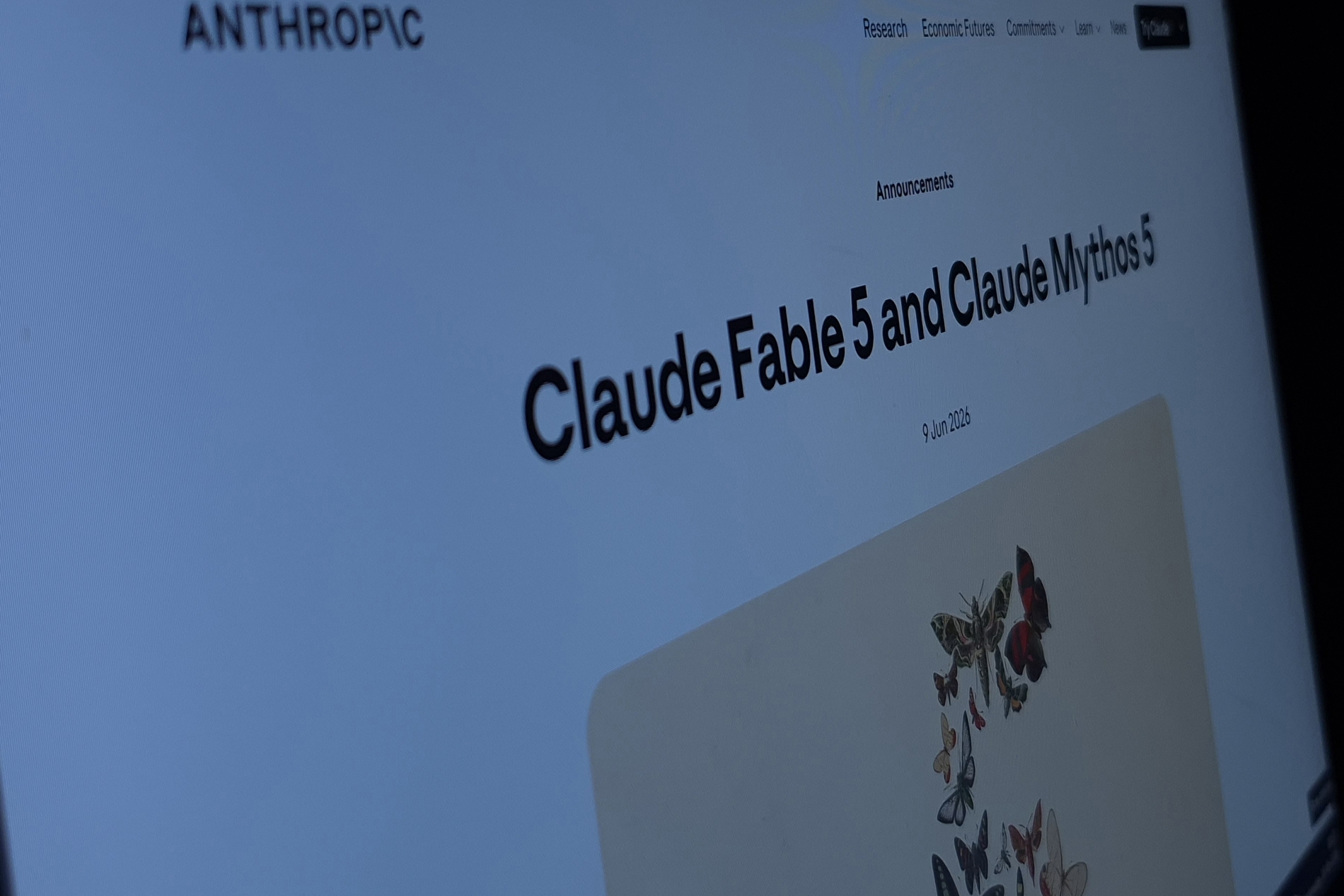
On June 9, Anthropic released Claude Fable 5, its first publicly available “Mythos-class” model. By June 12, it was gone.
At 5:21 PM Eastern time on June 12, Anthropic received an export control directive from the US government ordering it to suspend all access to Fable 5 and Mythos 5 for any foreign national, whether inside or outside the United States, including Anthropic’s own foreign-national employees. Because the directive applied to all non-US citizens, regardless of location, Anthropic had no practical way to selectively block users and had to disable the models globally to ensure compliance.
To understand why this is big news, you need to know what Fable 5 actually was.
Launched as a preview in April, the Claude Mythos was initially limited to a handful of partners due to cybersecurity concerns. It was later expanded to hundreds of organizations across 15 countries.
Fable 5 was the same tier of technology made available to everyone. On software engineering benchmarks, it outperformed every other publicly available AI model. Stripe reportedly used it to migrate a 50-million-line codebase in a single day, something that would have taken a team of engineers two months. In biology, Mythos 5 designed protein candidates for drug targets, with 9 of 14 targets yielding strong results, and generated novel hypotheses that scientists preferred 80% of the time over older models.
So who actually pulled it?
Amazon CEO Andy Jassy personally alerted Scott Bessent, the Secretary of the Treasury, that Amazon cybersecurity researchers had successfully jailbroken Fable 5 to extract information usable in cyberattacks. That disclosure set off a rapid chain of White House deliberations that resulted in the export control directive shutting down the models worldwide.
The uncomfortable part is that Amazon is simultaneously Anthropic’s largest financial backer and its primary infrastructure provider. In April 2026, Anthropic committed to spending over $100 billion on AWS infrastructure, and Amazon added a fresh $5 billion investment on top of its previous $8 billion stake.
The company that bankrolls Anthropic’s infrastructure is the same one that told the government Anthropic’s models are dangerous. What an irony!
Amazon has not clarified whether it ran the jailbreak tests at the White House’s request or on its own.
The actual security concern, per Anthropic’s account, is a method to bypass Fable 5’s safeguards, allowing the model to read a specific codebase and identify software flaws. Anthropic describes this as a narrow, non-universal jailbreak. The AI company says the government shut down its flagship product over a vulnerability that also exists in competing models still available to everyone, such as OpenAI’s GPT-5.5.
The government’s version differs.
David Sacks, Co-Chair of the President’s Council of Advisers on Science and Technology, published a detailed account claiming that before the directive was issued, the administration asked Dario Amodei to either fix the jailbreak or pull Fable 5, but Amodei refused.
Sacks also wrote that the administration “issued the export control reluctantly” and was “frankly bewildered that Anthropic hasn’t wanted to comply with safety requests that it previously said were its highest priority.” Anthropic says it notified the government multiple times about the planned June 9 release of Fable, and the government did not object.
This fight did not start last week.
Anthropic’s relationship with the government ruptured earlier this year after it refused to allow the US military to use its AI models for domestic surveillance and fully autonomous weapons systems. The government responded by putting Anthropic on a supply chain blacklist. Anthropic then sued the Trump administration to reverse the blacklisting, and that litigation is still ongoing.
What makes this historically significant is not just the fight but the tool used to wage it. For years, US export controls focused on the chips and tools that power AI rather than restricting foreign access to AI software itself. But now, these escalations show the US’s efforts to halt foreign adversaries’ AI capabilities.
As of today, Anthropic has sent senior technical staff to Washington to meet with White House officials in person to seek a reversal of the export controls. Sources from both sides say they want to resolve the issue, but administration officials have claimed Anthropic has not engaged seriously.
The precedent, though, is already set. A model capable of debugging 50 million lines of code in a day was taken offline globally because its largest investor told the government it was dangerous. Whether that is legitimate national-security caution or a tool of political pressure in an ongoing dispute with a company that refused to arm autonomous weapons, the line has been crossed. The US government can now treat deployed AI software the same way it treats weapons-grade hardware.