
















Credit: Shutterstock
Samsung’s newest flip phone costs $100 more than last year’s model, and it’s difficult to tell why.
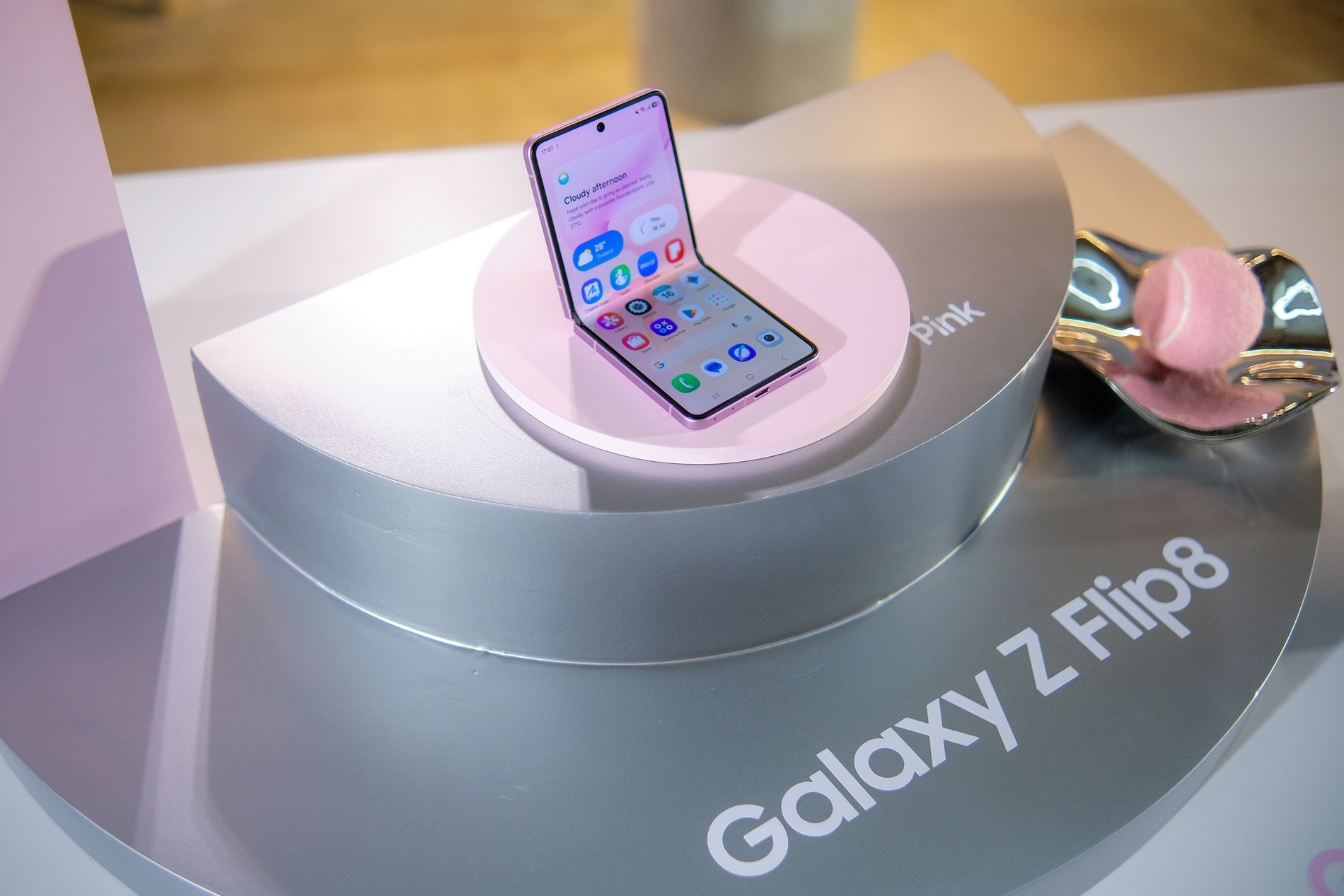
Samsung unveiled the Galaxy Z Flip 8 at its Galaxy Unpacked event in London on July 22, 2026, alongside the new Z Fold 8 lineup. It goes on sale August 7, 2026. The phone keeps the clamshell design that made the Z Flip series popular, and this year Samsung mostly refined details rather than rethinking the formula. For anyone deciding whether to upgrade or buying a flip phone for the first time, here is what actually matters.
Key Specs at a Glance
- Price: $1,199 for 256GB storage, $1,399 for 512GB, both with 12GB of RAM
- Displays: 6.9-inch foldable main screen, 4.1-inch cover screen, both up to 120Hz
- Chip: Snapdragon 8 Elite Gen 5 (US, Canada, China) or Exynos 2600 (other regions)
- Cameras: 50MP main, 12MP ultrawide, 10MP selfie
- Battery: 4,300mAh silicon-carbon cell, 25W wired and 15W wireless charging
- Build: Armor Aluminum frame, Gorilla Glass Victus 2, IP48 water and dust rating
- Weight: 180 grams
- Software: Android 17 with One UI 9, 7 years of OS and security updates
- Colors: Graphite, Pink, Cream, and Mint (Samsung.com exclusive)
Price and Availability
The Galaxy Z Flip 8 starts at $1,199 for the 12GB RAM and 256GB storage model. A 512GB version costs $1,399. Neither storage option can be expanded with a memory card, so it is worth deciding upfront how much space you actually need.
That starting price is $100 higher than the Z Flip 7, which puts the Z Flip 8 firmly in flagship pricing territory. Samsung and its carrier partners are offering trade-in credit worth up to $1,200 for eligible older phones, which can meaningfully lower the real cost for anyone upgrading from an existing device.
Design and Build
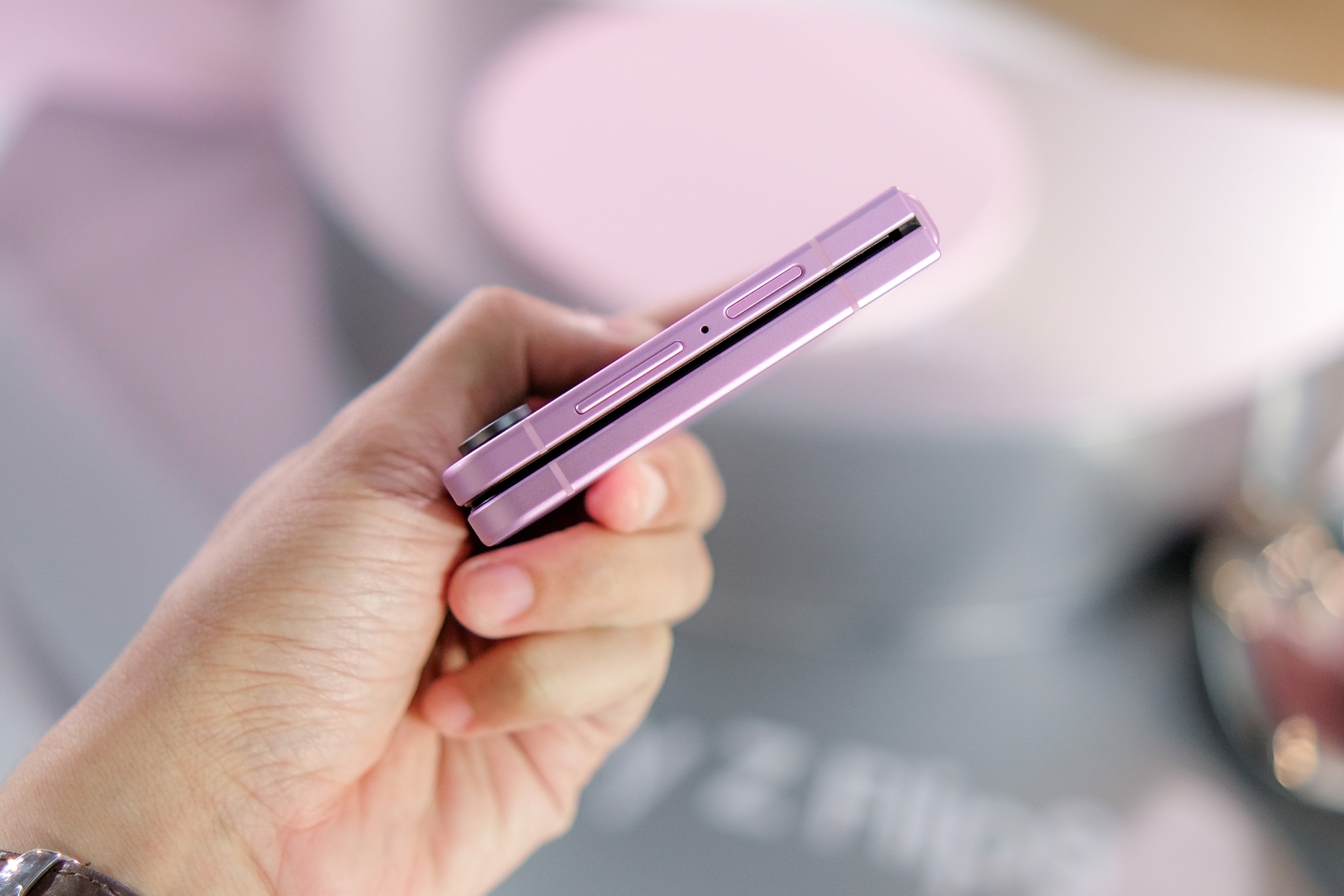
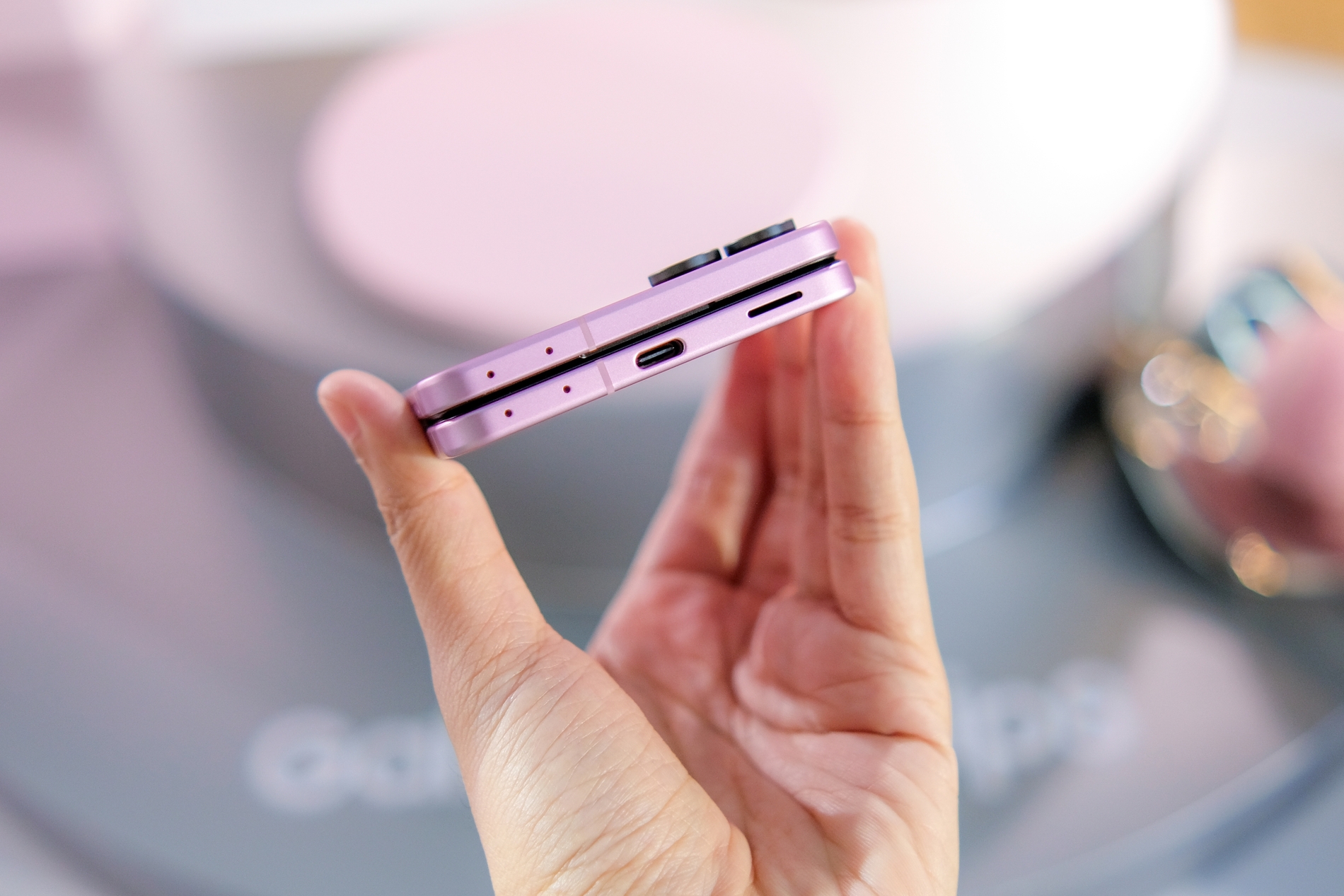
The biggest change this year is size. The Z Flip 8 measures 6.1mm thick when unfolded, down from 6.5mm on the Z Flip 7, and about 13.1mm thick when folded, down from 13.7mm. It also weighs about 180 grams, roughly 8 grams lighter than last year’s model. Samsung calls it the thinnest and lightest Z Flip yet, and in hand it does feel more refined.
Credit: Shutterstock
One practical downside of the new dimensions is that cases made for the Z Flip 7 do not fit the Z Flip 8. Anyone upgrading will need to buy a new case along with the phone.
The frame is Armor Aluminum, and both the front and back glass use Gorilla Glass Victus 2. The phone carries an IP48 rating, which means it can handle being submerged in up to 1.5 meters of fresh water for 30 minutes. On the dust side, it is only rated to resist solid particles larger than 1mm, so fine dust and sand are not fully covered. This is the same rating the Z Flip 7 had, and it falls short of the IP58 rating some rival foldables, including recent models from OnePlus and Honor, now offer.
Credit: Shutterstock
Display
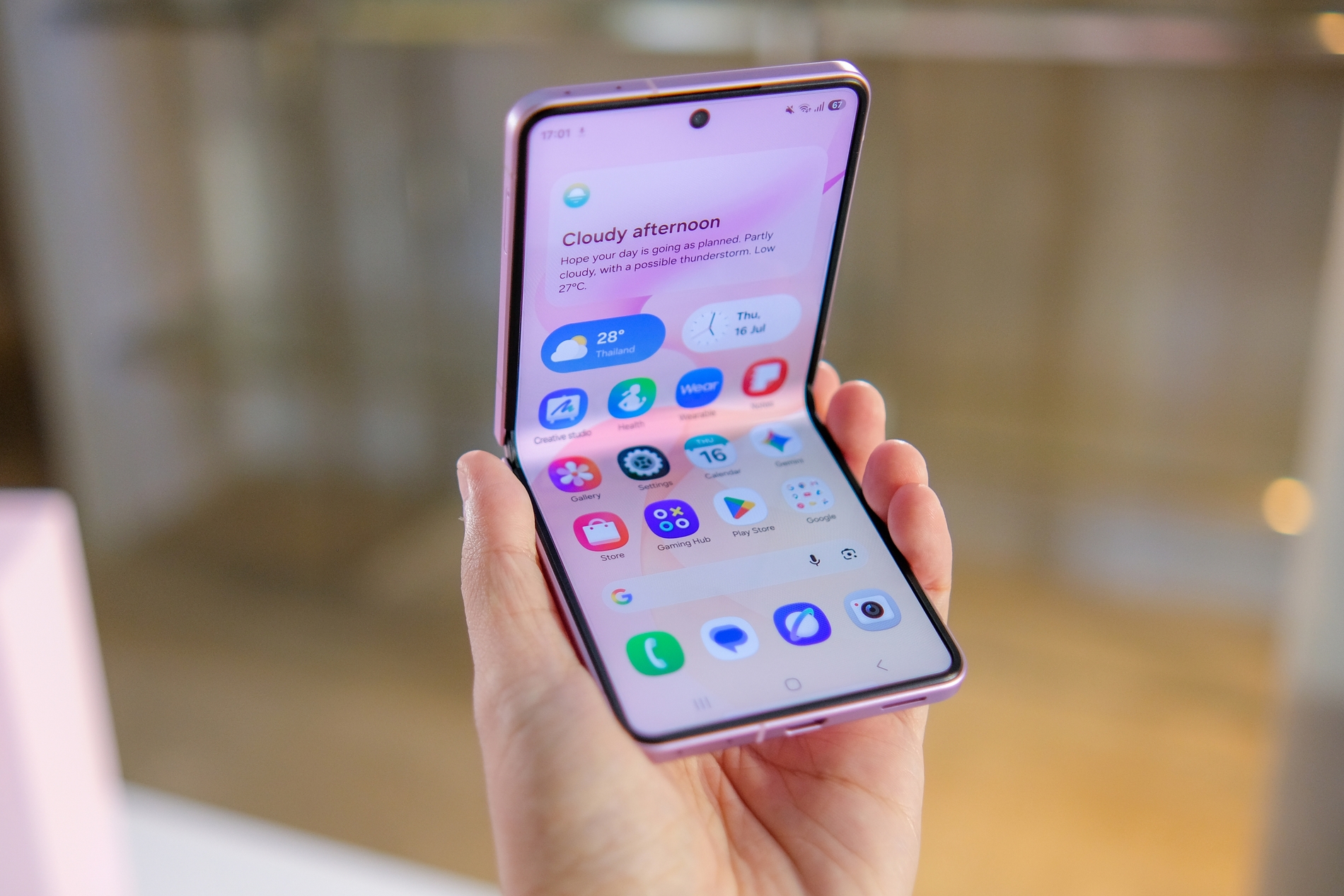
Both screens are the same size as before. The main foldable display is 6.9 inches, and the cover display is 4.1 inches. What changed is the structure underneath the main screen. Samsung added a new dual-layer ultra-thin glass design that reduces the visible crease by 30% compared to the Z Flip 7. We tested it and noticed the crease is noticeably less visible, though it hasn’t disappeared and can still be felt when you touch that part of the screen.
Credit: Shutterstock
Credit: Shutterstock
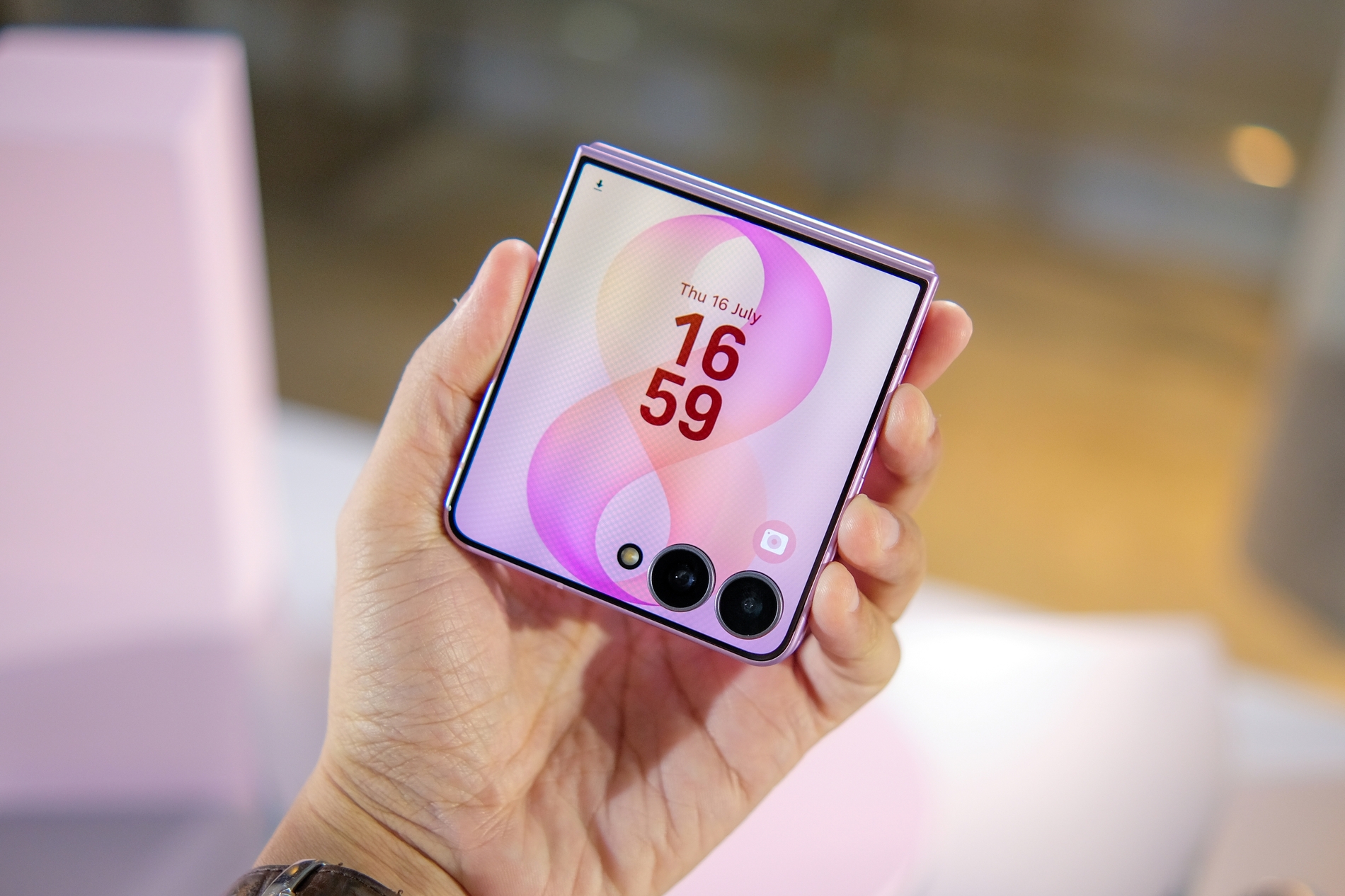
The cover screen got a bigger upgrade. It now operates at up to 120Hz instead of 60Hz, so scrolling and animations feel smoother. Samsung also expanded what you can do on it out of the box. Up to 16 apps, including Google Maps, Calculator, and Calendar, now work directly on the small screen without any workaround. Anyone who wants more apps on the cover display will still need to install Samsung’s Good Lock add-on, as before.
Camera
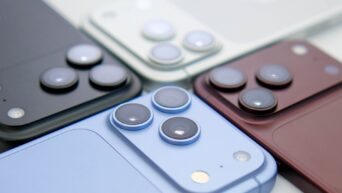
The camera hardware has not changed. The Z Flip 8 uses the same 50-megapixel main sensor and 12-megapixel ultrawide lens Samsung has used since the Z Flip 6 in 2024, plus a 10-megapixel selfie camera. This is the third year in a row without a hardware upgrade.
What has improved is the image processing. Samsung’s updated ProVisual Engine produces more natural skin tones, better background blur in portraits, and improved low-light video. Photos taken in daylight look very similar to those from the Z Flip 7. The software improvements show up more clearly in trickier lighting and in video.
Performance and Battery
In the United States, Canada, and China, the Z Flip 8 comes with Qualcomm’s Snapdragon 8 Elite Gen 5 chip. Everywhere else, it uses Samsung’s own Exynos 2600. Both versions come with 12GB of RAM, and the phone handles everyday use and demanding apps without slowdown.
Battery capacity stays at 4,300mAh, unchanged from the Z Flip 7. The difference is that Samsung switched to a silicon-carbon battery, a first for the Z Flip line, which is meant to improve efficiency and run cooler while charging.
Early battery test results have been inconsistent. Most people recorded a slight improvement over the Z Flip 7, though at least one reviewer’s continuous video playback test actually showed a small decrease.
On a 25-watt wired charger, the Z Flip 8 reaches about 59% in 30 minutes. Wireless charging tops out at 15 watts, and no charger is included in the box. In one person’s testing, Motorola’s rival Razr Ultra, which uses a larger battery, lasted over four hours longer on the same test.
Software and AI Features
The phone comes with Android 17 and Samsung’s One UI 9. Galaxy AI features are built in throughout, including Now Brief and Now Nudge, which surface reminders and daily summaries, and Gemini Intelligence integration for tasks like organizing notes or automating steps across apps. Photo Assist lets you edit images using simple text prompts instead of manual tools.
Samsung is also promising 7 years of both operating system updates and security patches. That is a genuinely strong long-term support commitment and matches the rest of Samsung’s current flagship lineup.
Pros and Cons
What’s good:
- Thinner and lighter than any previous Z Flip
- Noticeably less visible screen crease
- More capable cover screen, with a faster refresh rate and more built-in apps
- Strong update commitment at 7 years of OS and security support
What’s not:
- Camera hardware unchanged for a third straight year
- $100 price increase over the Z Flip 7 for mostly incremental gains
- IP48 rating still falls short of full dust resistance
- Battery capacity unchanged, with only modest real-world gains
Should You Buy It
The Galaxy Z Flip 8 makes the most sense for anyone still using a Z Flip 5 or older, or for someone buying their first flip phone. The gains in thinness, the better cover screen, and the reduced crease add up to a noticeably nicer experience compared to older models.
If you already own a Z Flip 7, there is little reason to upgrade. The core experience, including the camera, is nearly identical, and the price is higher. For that group, waiting for next year’s model is the more sensible choice.