






























Credit: Shutterstock
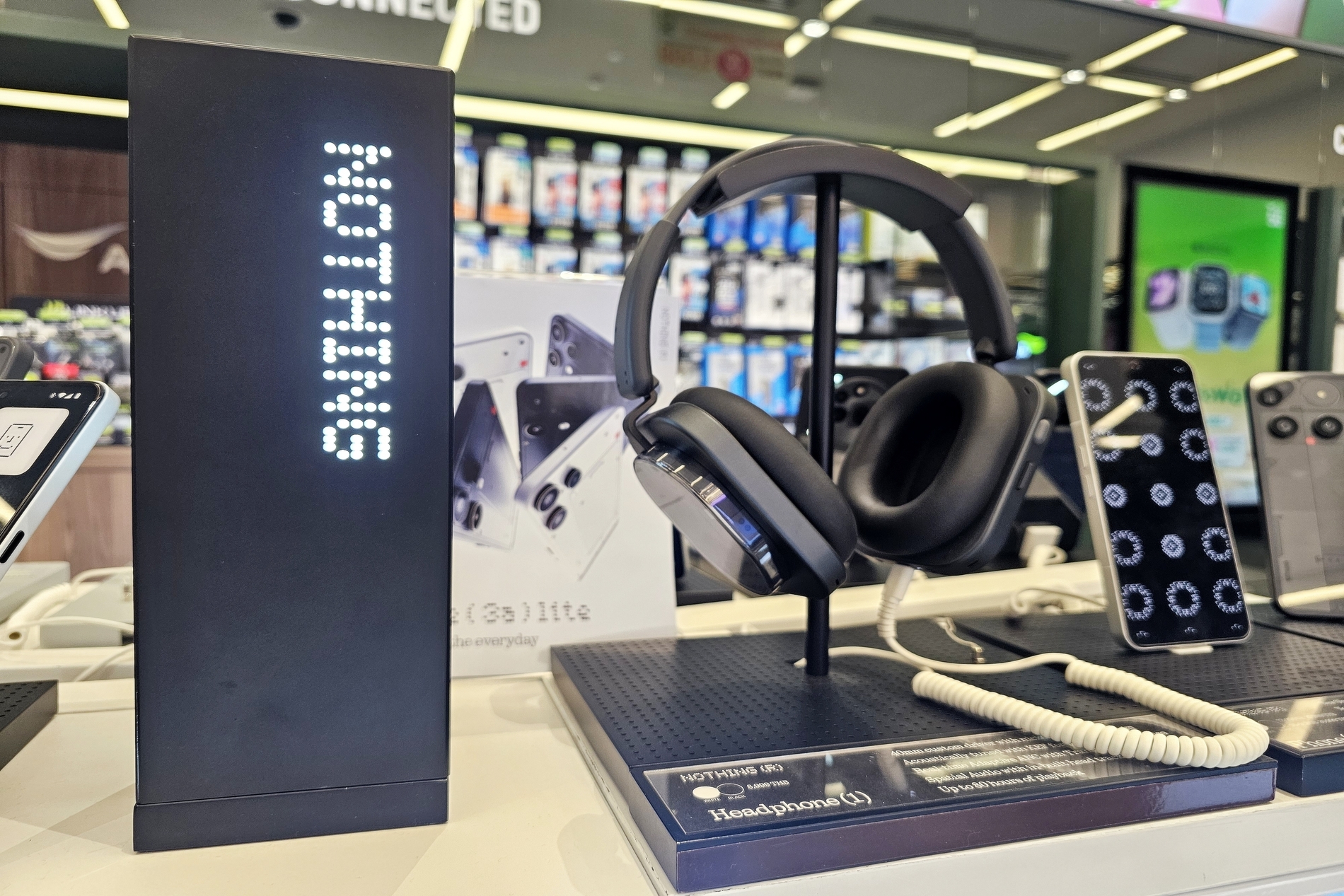
Nothing’s first over-ear headphones stand out before you even put them on.
Nothing built its reputation on transparent smartphones and budget-friendly earbuds. In the headset segment, it introduced the Nothing Headphone (1), tuned in partnership with British audio brand KEF. It currently costs $299. More than a year after launch, it remains one of the most talked-about releases because nothing else on the market looks like it.
Let’s take a look at what you get and what you give up when you buy these headphones.
Design and Build
The Nothing Headphone (1) is built from a mix of aluminum and plastic, with transparent panels that show off parts of the internal hardware. It’s the same design language Nothing has used since its first phone. The ear cups’ shape resembles old cassette tapes, and the overall look divides opinion. Most people find it distinctive rather than unattractive, and I agree that the build quality feels premium.
It weighs 329 grams, heavier than most rivals, though still lighter than Apple’s AirPods Max. I wore them for long podcast sessions and noticed the extra weight. The headband also felt a bit too tight. The ear pads use faux leather over memory foam and are comfortable for most head shapes.
One spec worth appreciating is that the Headphone (1) carries an IP52 rating for dust and light water resistance. Most rivals at this price, including the AirPods Max, offer no rating at all, so this is an advantage if you plan to wear them at the gym.
It comes in only two colors, black and white, and the case doesn’t fold flat like Sony’s or Bose’s, so it takes up more room in a bag.
Controls
This is where the Headphone (1) breaks from the norm. Instead of touch panels, which most premium headphones use, it relies on physical buttons built into the right ear cup:
- A roller for volume, play and pause, and switching between noise cancellation and transparency mode
- A paddle for skipping tracks, scrubbing through audio, and answering or ending calls
- A programmable button for a voice assistant, switching audio sources, or other shortcuts set in the app
- A physical on/off switch, separate from a dedicated Bluetooth pairing button
I love it, honestly, as there are chances for accidental taps and no guessing which gesture does what.
Sound Quality
This is where opinions split. Out of the box, several online reviewers described the default sound as dark, bass-heavy, and a bit compressed for a $299 headphone competing against the Sony WH-1000XM6 and Apple AirPods Max. I would second this argument.
The Nothing X companion app offers an 8-band EQ, and this changes the picture considerably. I tuned and listened for a noticeable improvement. You can also import EQ profiles shared by other users, so you don’t have to start from scratch.
The practical takeaway: If you’re willing to spend a few minutes adjusting the EQ, the sound becomes genuinely competitive. If you expect great sound the moment you unbox it, this is the headphone’s weakest point.
Noise Cancellation and Calls
The Nothing Headphone (1) uses a hybrid active noise cancellation system with six microphones, four of which handle calls. Nothing says the ANC can reduce noise by up to 42 dB, with the system adjusting itself in real time as your surroundings change.
I’d say the noise cancellation is excellent. It comes very close to the Bose QuietComfort Ultra and Sony WH-1000XM6, though those models still have a slight edge in the noisiest environments.
Call quality is a weaker point. Multiple people reported muffled or slightly robotic voice reproduction, and performance drops further in windy or noisy environments. If phone calls are a big part of your daily use, this is worth keeping in mind.
Battery Life
Battery life is one of the Headphone (1)’s biggest strengths, outperforming most direct competitors.
- Up to 80 hours of playback with noise cancellation off, using the standard AAC codec
- Up to 35 hours with noise cancellation on
- Up to 54 hours (ANC off) or 30 hours (ANC on) if you use the higher-quality LDAC codec
- A 5-minute charge adds roughly 5 hours of playback without ANC, or about 2.4 hours with ANC on
The Nothing X App
The Nothing X App (iOS and Android) is one of the product’s strongest features. Beyond the EQ, it includes ANC level customization, a low-lag mode for gaming, automatic pause when you remove the headphones, dual-device connection, and a “Find My Headphones” locator.
Pros and Cons
Pros
- Distinctive design and excellent build quality
- Genuinely useful physical controls, no accidental touches
- Strong battery life, ahead of most competitors
- Deep EQ customization that significantly improves the default sound
- IP52 water and dust resistance, rare at this price
Cons
- Default sound is flat and needs EQ adjustment to sound its best
- Heavier than most rivals aside from the AirPods Max
- Call quality lags behind competitors
- Case doesn’t fold, takes up more space when traveling
Should You Buy It?
The Nothing Headphone (1) marks the company’s first real attempt at making over-ear headphones. The design, controls, battery life, and app are all genuinely well executed, and the IP52 rating is a rare bonus at this price. The main downside is sound quality, which needs an EQ tune-up to compete with rivals like the Sony WH-1000XM6 or AirPods Max.
If you enjoy tuning your headphones and want something that looks and feels different from everything else on the market, the Headphone (1) is easy to recommend, especially when it’s on sale for around $250. If you want great sound straight out of the box and don’t want to touch an app, you may be better served by a more established competitor.