




























Credit: Shutterstock
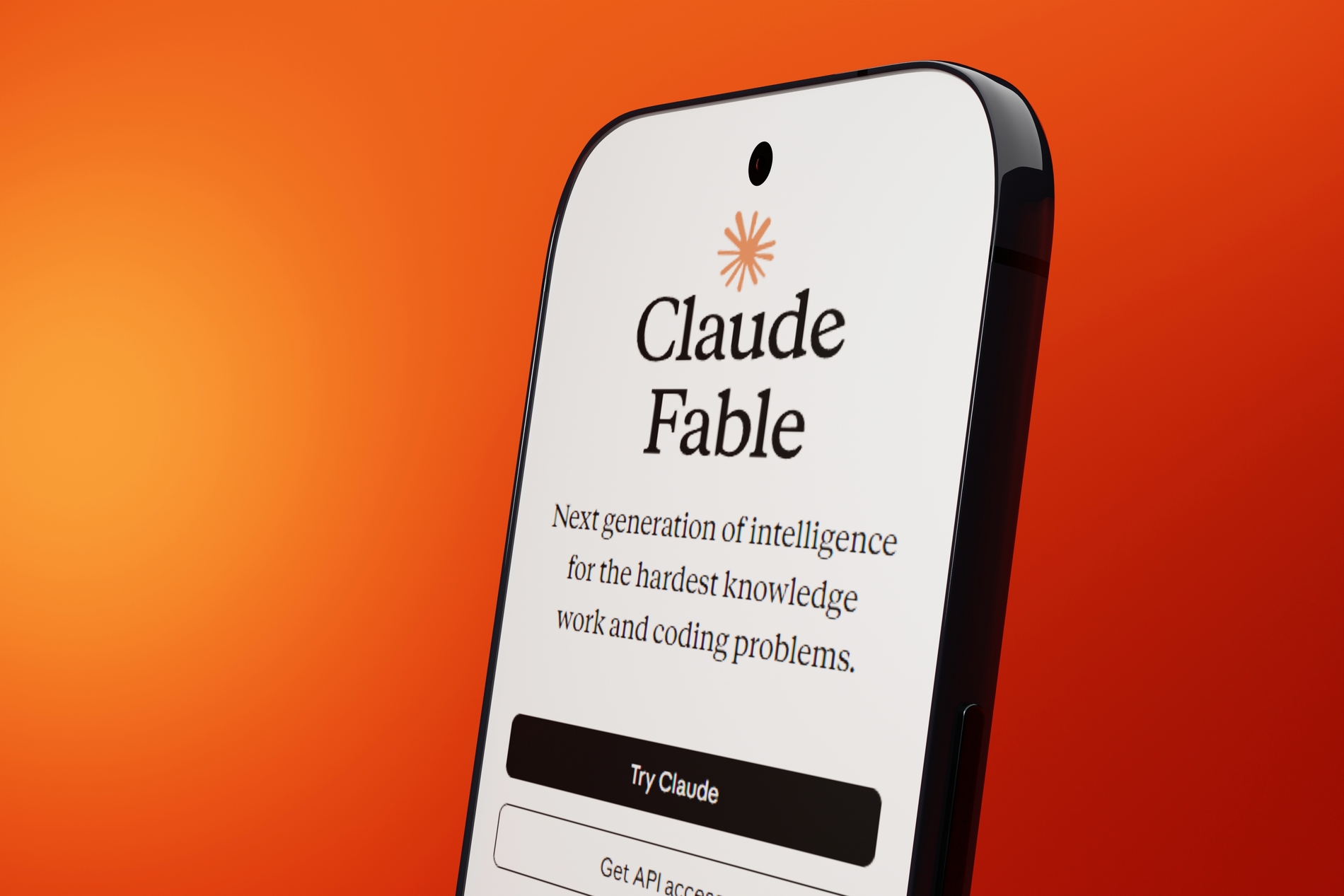
Claude Fable 5 is Anthropic’s most powerful public model now available after a shutdown.
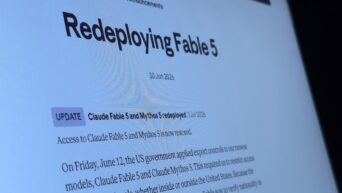
If you have a Claude subscription and you’re confused about what Fable 5 actually is, you’re not alone. It showed up in the model picker, disappeared a few days later, and now came back.
This review covers what Fable 5 is, what it’s genuinely good at, where it falls short, and whether it’s worth spending credits on it.
What is Claude Fable 5
On June 9, 2026, Anthropic introduced a new tier above Opus, called “Mythos.” Claude Fable 5 is the first model in that tier made available to the public.
In terms of specs, Fable 5 provides a 1-million-token context window, up to 128,000 tokens of output per request, and a knowledge cutoff of January 2026.
It supports five thinking effort levels, from low to max, and you choose how hard it thinks before it answers. It does not show you its raw reasoning trace. What you see is either a summarized version of its thinking or nothing at all, depending on how it’s configured.
Right now, using Fable 5 cuts tokens from your weekly Pro, Max, or Team limit, up to 50% of that limit. Starting after July 7, 2026, Fable 5 will no longer use your plan’s weekly allowance. Instead, you’ll pay with prepaid usage credits at the same rates as the API. To keep using Fable 5, enable usage credits and set a spending limit in your account settings before July 7.
Where Does Fable 5 Justify Its Price
The Fable 5’s biggest strength is long, messy, agentic coding work. On Anthropic’s SWE-bench Pro benchmark, Fable 5 scores about 80%, compared to 69% for Opus 4.8. On Terminal-Bench 2.1, it hits 88%. Independent aggregator Artificial Analysis put Fable 5 at the top of its overall Intelligence Index at launch, ahead of every other lab’s best model at the time.
Our testing shows that Fable 5 handles vague or incomplete instructions unusually well. For example, give it a half-finished spec, and it tends to explore the codebase first, figure out what tools and constraints exist, and then build something complete rather than a half-working prototype.
Vision and document work are their strengths too. We compared Fable 5 to Opus 4.8 on tasks such as formatting a PDF or laying out a printable worksheet. We found that Fable 5 produced noticeably cleaner spacing and more readable layouts, while Opus 4.8’s version came out denser and harder to read. If your work involves parsing scanned documents, reformatting PDFs, or anything that’s vision-heavy, this is where the upgrade shows.
It also knows more. Asked to list a prolific open-source developer’s projects from memory, with no web search enabled, Fable 5 produced a longer and more specific list with real release dates than Opus 4.8 did, which mostly declined to guess. That’s not proof it reasons better, but it does suggest a genuinely larger model under the hood.
Anthropic’s internal testimonials describe Fable 5 as the strongest model they’ve tested for finance-first reasoning and claim that its legal redlines matched or beat those of their existing model in a blind review. It’s also apparently the first model to cross 90% on its internal long-running analytics benchmark, about 10 points ahead of Opus.
Where it Falls Short
Fable 5 is expensive. It costs $10 per million input tokens and $50 per million output tokens, which is exactly double Opus 4.8’s rate and 5x Sonnet 5’s current promotional pricing.
Part of the reason it’s expensive is that the behavior pattern is relentlessly proactive. We asked for help debugging a two-line CSS scrollbar. We watched Fable 5 spin up browser windows, write its own test pages, script keyboard shortcuts into a live web page, and build a small custom local web server to capture diagnostic data, all without being told to do any of that. It’s genuinely impressive problem-solving, but it also means the model will happily spend a lot of tokens chasing a fix that a human could likely find faster by reading the CSS.
It’s also worth noting that a model this willing to improvise its own tools is just as willing to improvise if it’s ever tricked by a malicious instruction hidden in a file or a webpage, so running it with unsupervised system access carries risk.
Writing quality is a weaker spot than you’d expect from Anthropic’s flagship model. Testers doing prose work, such as product specs or requirements documents, described Fable 5’s output as functional but not pleasant to read, more like something optimized for another AI agent to parse than for a person to enjoy. If your main use case is writing, a well-tuned Sonnet 4.6 or Opus 4.8 prompt is likely to feel more natural.
Code review is a mixed bag too. In one benchmark run by a code review company testing Fable 5 against their existing tools and Opus 4.8, Fable 5 caught roughly the same number of issues but flagged more false positives, resulting in more noise for a human to sift through. It’s a better fit for writing and building code than for reviewing someone else’s.
Finally, there’s a data policy detail worth knowing before you use it for anything sensitive. Fable 5 and Mythos 5 require a mandatory 30-day data retention policy across all platforms, including the API, with no zero-data-retention option available. Anthropic says this data is used only to detect misuse patterns, not for training, but that’s a real difference from Sonnet and Opus, which do offer a no-retention option in some settings.
How it Stacks Up Against GPT-5.5 and Gemini 3.1 Pro
In the benchmarks, Fable 5 clearly leads in agentic coding and computer-use tasks. GPT-5.5 pulls ahead on abstract reasoning benchmarks like ARC-AGI-2 and on FrontierMath, and Gemini 3.1 Pro currently holds the highest score on GPQA Diamond, a graduate-level science reasoning test. None of the three models wins everything. Price-wise, Fable 5 is the most expensive of the three: GPT-5.5 costs half as much per token.
The Big Question: Should You Use It
If you’re working on complex coding, large code changes, difficult debugging, or handling long documents, Fable 5 is worth using. It costs more, but it can save enough time to make the extra cost worthwhile.
For everyday tasks like writing emails, creating summaries, or answering simple questions, you’re better off using Opus 4.8 or Sonnet 5.
One more tip: don’t rely entirely on Fable 5. The three-week outage in June showed that access to a specific model can disappear without warning. Always have another model ready as a backup for important work.