



























Credit: Shutterstock
Physicists in Germany used specialized diamond-based quantum sensors to measure the weak magnetic signals produced by a beating heart.
The research was carried out by Johannes Gutenberg University Mainz, the University of Stuttgart, and quantum technology company Q.ANT.
Unlike some existing magnetic heart sensors, which require extremely low temperatures, these diamond sensors work at room temperature. This could eventually make heart monitoring simpler and more practical in hospitals.
How did the scientists measure the heartbeat?
The researchers developed three diamond-based magnetic sensors and tested them on people. These devices measure Magnetocardiography (MCG), magnetic fields produced by the heart’s electrical activity.
An Electrocardiogram (ECG), by comparison, measures the heart’s electrical signals using electrodes attached to the skin.
The three diamond sensors achieved different levels of sensitivity:
- Mainz sensor: Detected signals at a sensitivity of 13 pT/√Hz. The researchers averaged its results over 12,000 heartbeats.
- Stuttgart sensor: Reached 7 pT/√Hz, with results averaged over 300 heartbeats. However, the researchers did not obtain a convincing detection comparable to the other two systems.
- Q.ANT sensor: Reached 26 pT/√Hz. It worked without magnetic shielding, but the researchers had to use computer filters to reduce unwanted noise. Its results were averaged over 2,000 heartbeats.
In these measurements, a lower sensitivity number means the sensor can detect weaker magnetic fields.
The scientists also compared the diamond sensors with an established type of magnetic sensor called an Optically Pumped Magnetometer (OPM). They found that the diamond sensor’s signals were similar in strength to those of the OPM system.
To confirm that the diamond sensor was detecting the heart’s magnetic field rather than accidentally picking up its electrical signal, the researchers measured the chest at two different positions. The signal changed direction between the positions, supporting the conclusion that it was a genuine magnetic signal.
How can a diamond detect a heartbeat?
The technology relies on tiny defects inside the diamond crystal called Nitrogen-Vacancy (NV) centers.
An NV center forms when a nitrogen atom replaces a carbon atom in the diamond, next to an empty space in the crystal. The defect has an electron whose properties change in response to magnetic fields.
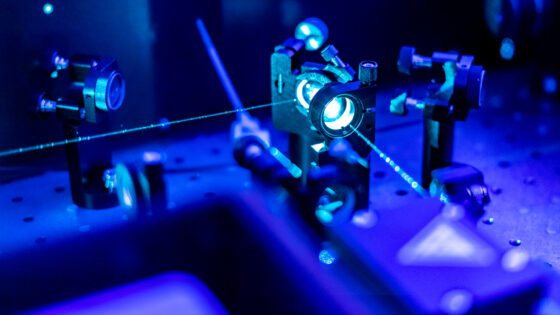
Scientists use a laser and microwaves to measure these changes. When the magnetic field changes, the light coming from the diamond changes too. Special electronics measure these changes and convert them into a magnetic field reading.
Because the diamond is so small, researchers could place it very close to the body. The sensors also work at room temperature, so they don’t need the expensive cooling systems required by some older technologies.
The researchers are also developing a setup called a Gradiometer. It uses two sensors to compare magnetic fields at different positions. This can help remove unwanted background noise while preserving the heart signal.
Why is this technology important?
MCG offers some potential advantages over conventional ECG testing.
An ECG is widely available, relatively inexpensive, and useful for checking heart activity. However, it requires electrodes to be attached to the skin, and body tissues can affect the electrical signals being measured.
MCG does not require direct skin contact. Magnetic fields can pass through body tissues with relatively little distortion, which may help scientists identify certain heart abnormalities and locate problems with the heart’s electrical activity.
However, MCG is currently used mainly in research and specialist medical centers. Equipment costs, complex systems, and the need to protect measurements from outside magnetic interference have limited its wider use.
Diamond sensors could help address some of these challenges.
They work at room temperature, can be made very small, and may eventually be placed directly against the skin. Researchers also believe similar technology could have applications beyond heart monitoring, including:
- Measuring the heartbeat of an unborn baby while separating it from the mother’s heartbeat.
- Mapping the heart’s electrical signals in three dimensions.
- Monitoring nerve activity during surgery.
- Measuring brain activity using a technique called Magnetoencephalography (MEG).
- Supporting future brain-computer interface technologies.
These are potential future applications, not proven medical uses of the sensors tested in this study.
What happens next?
The researchers are exploring several ways to improve the technology.
One approach uses special magnetic structures called Flux Concentrators. These collect magnetic fields over a larger area and direct them toward the diamond, potentially making weak signals easier to detect. The trade-off is that they can reduce the precision with which the signal source is located.
Another approach involves improving how researchers measure the diamond’s magnetic response. Some experimental techniques have already achieved sensitivities better than the researchers’ estimated target, although they can be difficult to implement.
The team is also investigating computational methods to separate the heartbeat’s magnetic signal from changing background noise. So far, the team has tested this approach in simulations rather than demonstrated it in a real-world heart measurement.
The work is part of DIAQNOS, a German research project developing diamond sensors for use in neurosurgery.
Wrap up
The study shows that a tiny diamond sensor can detect the magnetic field produced by the human heart while operating at room temperature. This could eventually lead to smaller and more convenient devices for measuring heart and brain activity.
However, the technology still needs to become more sensitive, reduce magnetic interference, and demonstrate reliable performance in clinical settings.
For now, this achievement is an important step toward developing diamond-based medical sensors, not proof they are ready to replace existing heart-monitoring tests.