


















Credit: Shutterstock
The Oura Ring 5 is the smallest and smartest ring Oura has ever made, and it also costs more than ever.
Oura has been setting the standard in the smart ring space for years, and the Ring 5, released in June 2026, is their biggest leap yet. It is thinner, lighter, and packed with new features. But it also costs a whopping $399 and locks most of those features behind a mandatory subscription.
So the question is not just whether the Ring 5 is a good product. It is whether the whole package, hardware plus ongoing fees, makes sense for you.
Quick Specs
| Starting price | $399 (Black, Silver) |
| Premium finishes | $499 (Gold, Stealth, Brushed Silver, Deep Rose) |
| Subscription | $5.99/month or $69.99/year |
| Charging Case | $99 (optional, sold separately) |
| Battery life | 6 to 9 days |
| Water resistance | IP68, up to 100 meters |
| Weight | From 2 grams |
| Width / Thickness | 6.09mm / 2.28mm |
| Available sizes | 6 to 13 |
Design: Finally Feels Like a Real Ring
Being 40% smaller than its predecessor, Oura Ring 5 is the brand’s thinnest smart ring yet. The width has dropped to 6.09mm, and the thickness is now 2.28mm, with the ring weighing just 2 grams.
It feels noticeably better on the finger compared to the Ring 4. Many users say it no longer feels like a “tech gadget” but just like a ring.
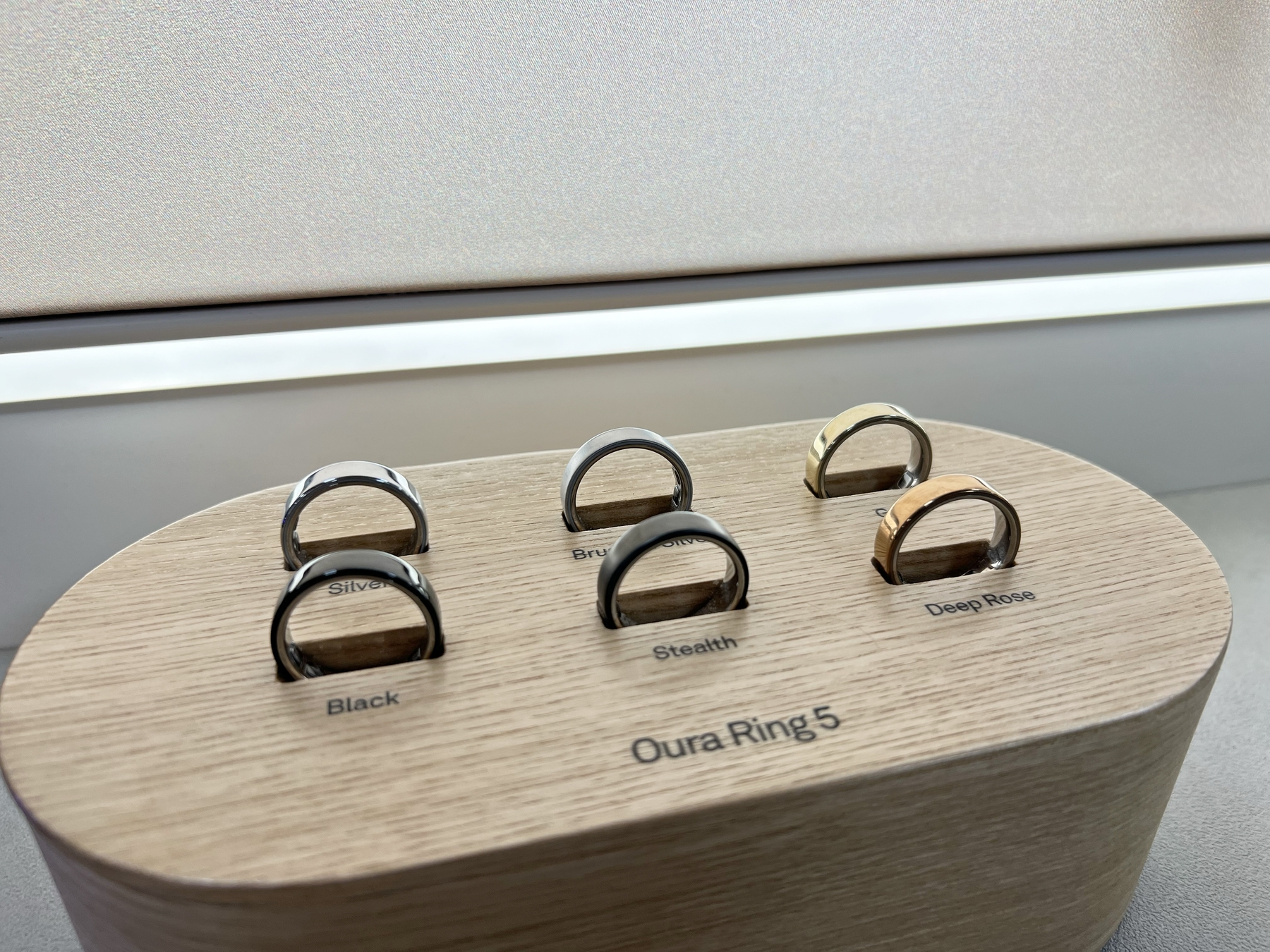
The Ring 5 is the first smart ring that feels ready for the mainstream. It is made of titanium with a physical vapor deposition coating, which gives it a scratch-resistant finish and keeps it free of metal allergens.
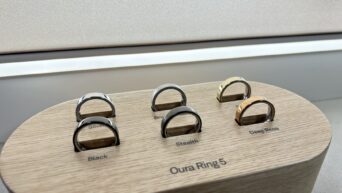
It comes in six colors: Black and Silver cost $399, and Gold, Stealth, Brushed Silver, and Deep Rose cost $499. It is available in sizes 6 to 13.
More Powerful Sensors
The hardware inside the Ring 5 got a full rework. Oura redesigned its sensor architecture, going from 18 light pathways to 12 with stronger signals, and the change clearly shows in the accuracy of daily Readiness, Sleep, and Stress scores.
Oura says the Ring 5’s LEDs are about 4x more powerful than the Ring 4’s, paired with low-profile sensor domes that sit closer to the skin.
The ring is allegedly 24% more accurate at movement detection than the Ring 4, 19% more accurate at workouts, and 12% more accurate at HRV monitoring.
Health Tracking: The Core Features
The Ring 5 tracks more than 50 health metrics through the Oura app. The main pillars are Sleep, Readiness, and Activity scores, all of which draw on continuous monitoring throughout the day and night.
Tracking includes:
- Sleep stages, duration, and quality
- Resting heart rate and heart rate variability (HRV)
- Blood oxygen levels (SpO2)
- Skin temperature
- Stress levels and resilience
- Women’s health and cycle tracking
- Activity and step count
General health and fitness tracking is excellent, and the metrics, for the most part, reflect how the wearer is actually feeling.
Health Radar: A Big New Feature
The headline addition to the Ring 5 is Health Radar. It includes two initial capabilities: Blood Pressure Signals and Nighttime Breathing.
Blood Pressure Signals is the one that has gotten the most attention, and it needs explanation too. The Oura Ring does not measure blood pressure and never shows a systolic or diastolic number. Instead, it uses its LED sensors to track changes in blood flow and blood vessel behavior. Over time, high blood pressure can change how stiff a person’s arteries are, and by monitoring shifts in blood flow, the ring can flag patterns associated with increased artery stiffness.
Nighttime Breathing is the second Health Radar feature. It tracks breathing patterns during sleep, watches for disturbances, and builds a 30-day rolling picture of respiratory health.
Sleep Tracking: Still the Best Around
Sleep tracking remains the Ring 5’s strongest suit. Sleep and resting heart rate matched Ring 4 readings in head-to-head testing, with HRV consistent with long-term baselines. The app breaks down sleep stages, tracks time to fall asleep, and flags patterns over time, making it the core reason most users buy the ring, and the Ring 5 delivers.
Activity and Fitness Tracking: The Weak Spot
The Ring 5 improved its workout tracking with Live Activity Tracking, which lets you track real-time pace, distance, and heart rate through connected devices. That is a meaningful step forward.
However, the Ring 5 still falls short for athletes. There is no built-in GPS, no advanced training metrics, and no structured workout guidance. It quietly tracks daily activity without a wrist device, and it does that better than ever. If you want a training partner, look elsewhere.
New Software Features Worth Knowing About
Beyond Health Radar, the Ring 5 launched alongside several other app updates. GLP-1 tracking tools let users log doses, side effects, body changes, and related health metrics in the Oura app, a timely addition given how widely used those medications have become.
The app also added Lab Uploads to import blood test results, Health Records to pull in clinical data, and Oura Advisor, an AI tool that generates personalized health guidance based on your data.
Battery Life: A Real Improvement
The Ring 5 battery lasts about 6 to 9 days, compared to the 5 to 8 days range on the Ring 4. That is a meaningful bump, especially considering the ring is now 40% smaller. Charging from zero to full takes around 20 to 80 minutes via the included magnetic charger.
The Charging Case: A Nice Addition, Sold Separately
One criticism of the Ring 4 was that it didn’t come with a portable charging case, something the Samsung Galaxy Ring has included since day one. Oura has finally addressed this with Ring 5. An aluminum charging case can store up to a month of battery and supports wireless charging, making it easier to travel with.
The catch: the case costs $99 and is sold separately. It is not included in the box, even at the $499 premium tier.
The Subscription: The Biggest Factor in the Decision
This is the part most people get stuck on, and for good reason. The Ring 5 costs $399 to start. It requires a subscription at $5.99 per month or $69.99 annually to get the most out of its tracking features.
Without a subscription, you only see three basic scores: Sleep, Readiness, and Activity, with no breakdown or context.
Oura’s CEO has defended the model publicly, arguing that the subscription funds ongoing software development and allows Oura to release new hardware generations less frequently. That is a fair point. The app does improve over time, and the Ring 5 launched with more new software features than any previous generation.
Still, the math is real. The first-year cost, including the ring and annual membership, comes to roughly $469 for the base model. That is before the optional $99 charging case. By year three, the subscription alone will have cost more than the ring itself.
How It Compares
The smart ring market has grown significantly, and the Ring 5 faces real competition.
- The Samsung Galaxy Ring costs $399.99 and requires no subscription, but it integrates deeply with Samsung Galaxy phones and doesn’t support iPhones. It also tops out at around seven days of battery life.
- The RingConn Gen 3 comes in at around $349 with no subscription and claims up to 14 days of battery life. It lacks the depth of Oura’s health platform, but for users who want to avoid ongoing fees, it is the most compelling alternative.
- The Ultrahuman Ring PRO costs $479, has no subscription, and claims up to 15 days of battery life, but its health insights aren’t as detailed or as well validated as Oura’s.
In 2026, the Oura Ring 5 remains the undisputed best smart ring you can buy, at least for sleep tracking, health insights, and overall app quality. Whether it is the best choice for your situation depends almost entirely on how you feel about paying a recurring fee.
Who Should Buy the Oura Ring 5
The Ring 5 is a strong buy if:
- You want the most detailed sleep and wellness data available from a ring
- You are comfortable with a subscription model for health software
- You want a ring that doubles as everyday jewelry and does not look like a tech gadget
- You are new to smart rings and want the most complete experience
It is probably not the right fit if:
- You train heavily and need real fitness tracking
- You want to avoid ongoing monthly or annual costs
- You are upgrading from a Ring 4 that is still in good shape (the Ring 4 also receives most of the new software features)
- You primarily use a Samsung Galaxy phone, where the Galaxy Ring integrates more seamlessly