
























Credit: Shutterstock
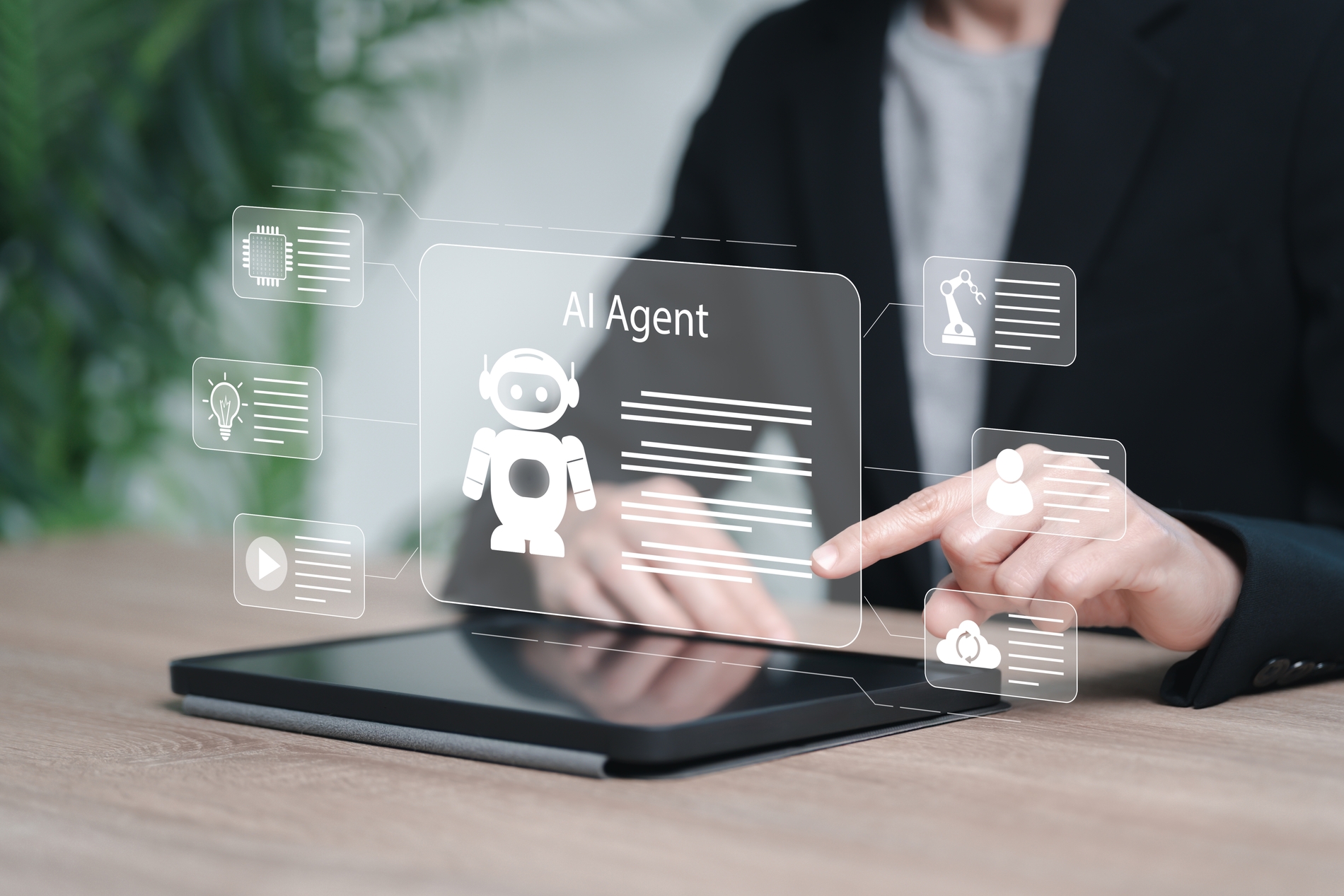
Workplaces everywhere are going through a quiet but powerful change. AI agents have grown from simple chatbots into independent digital coworkers that can handle complex tasks on their own. Companies across industries are realizing that these virtual colleagues aren’t just fancy experiments anymore. They’re already driving real business results.
Beyond Chatbots: The Rise of Real AI Agents
Traditional AI tools like GPT are great for single tasks or quick chats, but they often fail when it comes to long or complicated goals. AI agents, however, work differently. They don’t wait for constant instructions. They can plan, use multiple tools, access different databases, do deep research, and report back once the task is done.
The progress has been incredible. Not long ago, AI agents could only run for a few minutes before losing track of what they were doing. By early 2025, that limit grew to about 20 minutes. Now, many AI agents can operate independently for up to three hours while delivering accurate and meaningful results.
That’s not just improvement; that’s exponential growth. And soon, these agents will be able to handle work that takes a full day or even longer to complete.
Real-World Use Across Industries
Software development is one of the first areas to see major transformation. Developers now use AI agents inside tools like Slack, chatting with them just as they would with teammates. A quick message like “create a pull request” sets the agent in motion, and it spends hours producing quality code that once required junior engineers or interns. Replit, for example, says their support team would need to be ten times larger if not for AI help.
Sales teams are also adopting AI agents. These digital workers research prospects, write outreach messages, and even schedule meetings. In customer service, AI agents are solving tickets faster and more accurately than before. Quality assurance teams are using them too, letting AI handle repetitive testing and reporting tasks.
A great example comes from ARC Europe, a leading provider of roadside and insurance assistance. They introduced an AI agent to assist with claims processing. It analyzes repetitive data and creates structured recommendations, cutting processing time by 83% while improving accuracy.
How AI Agents Actually Work
Researchers from Stanford and Google developed an advanced system that allows large language models to behave more like humans. It follows three main steps: Memory and Retrieval, Reflection, and Planning. The agent gathers information from memory, processes it to understand what’s needed, and then creates a plan to achieve the goal.
The “memory stream” system keeps detailed records of everything the agent does, with timestamps. This helps it recall relevant information quickly without losing context. It allows the agent to learn from previous experiences and make smarter decisions over time.
The Changing Workplace
Studies from OpenAI, OpenResearch, and the University of Pennsylvania suggest that nearly 80% of U.S. workers will see AI influence at least 10% of their daily work. Around 19% may experience changes to half of their tasks, while 15% of all tasks could be done faster and more efficiently without sacrificing quality.
The impact is already visible. Some companies now generate $150 million in revenue with just 70 employees, a level of efficiency that once required 700 people. Forrester’s 2024 Automation Survey found that 83% of business leaders plan to boost their investment in AI agents and digital coworker technologies within the next year.
Businesses that are already using AI agents in marketing, sales, and product innovation are seeing real advantages. These digital coworkers help reduce friction for buyers, speed up sales processes, and create more personalized product experiences.
Future of Work
The future isn’t about humans competing with machines. It’s about humans and AI working together to achieve what neither could do alone. Virtual coworkers are no longer an idea of the future. They’re here now, transforming how business gets done every single day.