





























Credit: Shutterstock
The next big job in tech is filming yourself do the dishes
Attaching a camera to your head while making breakfast, folding laundry, doing other chores at home, and getting paid for it sounds interesting, right? It’s one of the fastest-growing jobs in tech right now.
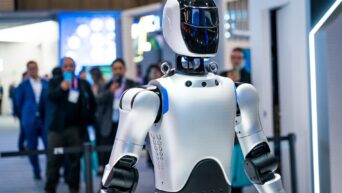
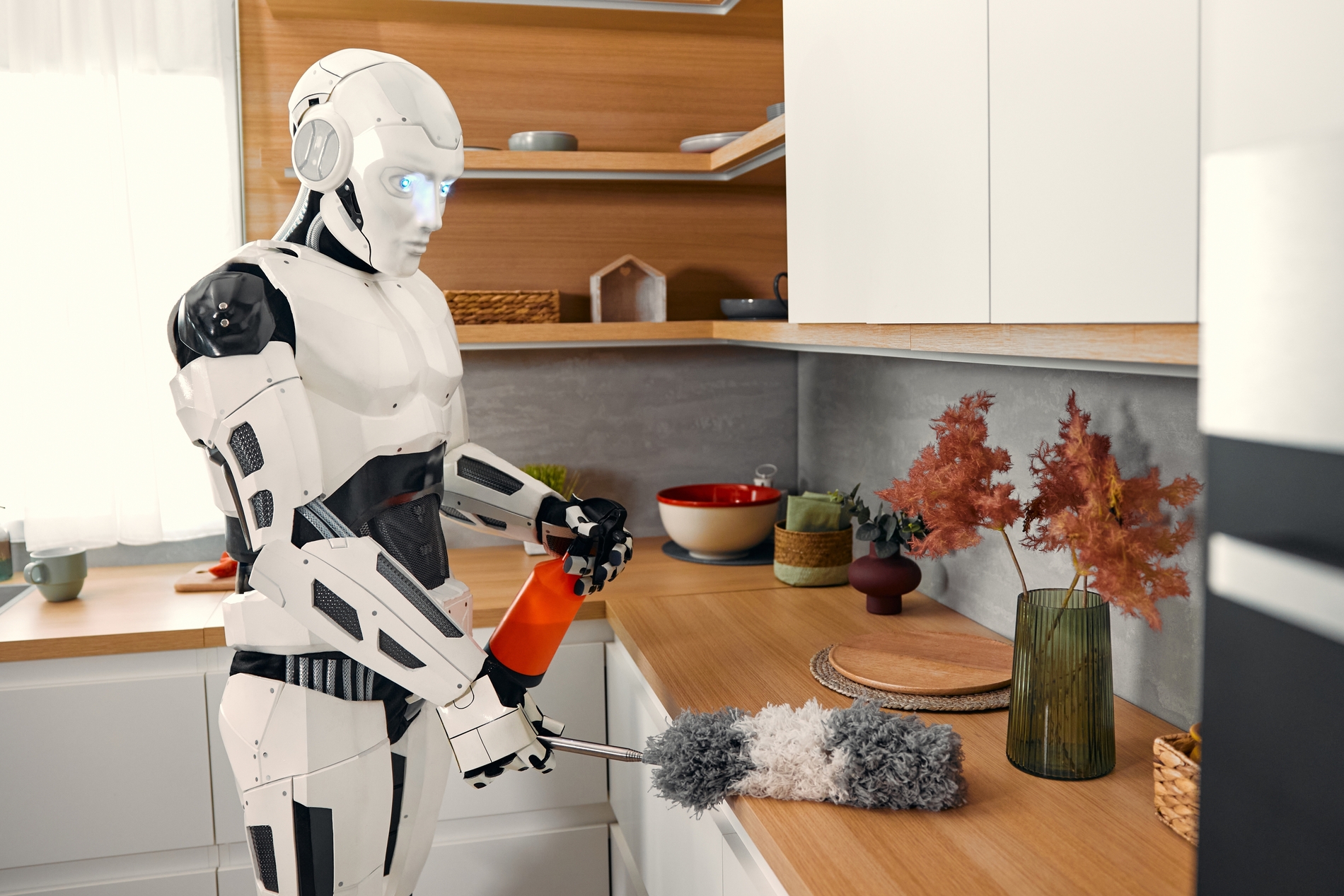
As humanoid robots inch closer to becoming a reality, the companies building them have run into a surprising problem. They concluded that robots don’t know how to do anything without watching us first. And the industry needs a lot of footage. They need billions of hours of ordinary people doing ordinary things, such as cooking, cleaning, gardening, and walking the dog, all captured from a first-person point of view.
This kind of footage is called “Egocentric Data,” and right now, it’s worth its weight in gold.
Why Robots Need to Watch Before They Can Do
For decades, robots were trained the old-fashioned way: a human operator with a remote control, guiding every move. It worked, but it was expensive and slow.
Then came virtual simulations. They were cheaper, faster, but unreliable when robots had to handle real physical objects. Picking up a glass in a simulation is easy. Picking up an actual glass, with all its weight and slipperiness, is a completely different challenge.
Human video data bridges that gap. It gives robots a window into how we naturally move through the world, how we grip a mop, tilt a pan, or reach around a pet that won’t stop getting in the way.
“Making robots generally useful for everyday household tasks like cooking, cleaning — that is going to be the last mile of automation,” said Rutav Shah, a robotics researcher at the University of Texas at Austin.
The Army of Home Videographers
Startups are now recruiting thousands of everyday people to become what one company calls “Robotics Generalists.” Workers receive a head-mounted camera, a list of household chores, and instructions to film at least 10 hours a week.
Companies like Micro1, based in Palo Alto, currently have around 4,000 such contractors spread across 71 countries, generating over 160,000 hours of video every month.
Still, that’s nowhere near enough.
“You need probably billions of hours,” said Arian Sadeghi, Micro1’s vice president of robotics data. “We haven’t even gotten to human interactions. This is just simple household chores.”
Pay ranges from $5 to $20 per hour, depending on location. It’s not life-changing money, but the barrier to entry is just a smartphone and a willingness to film yourself doing the dishes.
Every Kitchen Is Different and That Matters
Here’s something the robot industry quickly figured out. A broomstick in India does not look like one in the United States. Kitchens, furniture layouts, appliances, and storage habits vary wildly across cultures and countries, so a robot trained only on American homes would be nearly useless in an Indian apartment.
“Variety is important, but it depends where you are going to place your robots first,” said Ravi Rajalingam, founder of data annotation company Objectways. His company collects footage globally, though US households still command a premium because American consumers are expected to be the earliest adopters of home robots.
There’s also a massive quality problem. Rajalingam estimates that only about half of all submitted video footage is actually usable. The rest gets thrown out.
The Numbers Are Hard to Ignore
This isn’t a niche experiment anymore. The data collection and labeling industry is projected to grow roughly 30% per year, driven heavily by robotics demand, and is expected to hit at least $10 billion by 2030.
China alone has announced plans for 60 dedicated robot training centers across the country. NVIDIA, whose chips power much of the world’s AI, published a report in February showing that adding just 20,000 hours of first-person video to robot training improved tasks like folding T-shirts and unscrewing bottle caps by more than 50%.
That’s a significant jump from a relatively small amount of footage.
We’re Not There Yet
Let’s be honest about where things stand. Even in controlled factory environments, where conditions are predictable and consistent, humanoid robots currently achieve about 99.9% task accuracy. This number is impressive until you bring them home, where furniture knockoffs, kids leave toys on the floor, and nothing ever stays in the same place.
“The probability that it will succeed is usually around 70 or 80%,” said Alexander Verl of the International Federation of Robotics. “Coming from manufacturing, that’s really not something our industry partners want to use.”
Safety is an even bigger concern. Rajalingam put it bluntly: if a robot cleaning a playroom can’t tell the difference between a doll and a human baby, the consequences could be catastrophic. The robots are being tested on dogs first. Babies, he said, are still a long way off.
A Boom That Might Not Last Forever
Even the people profiting most from this data gold rush are hedging their bets. Puneet Jindal, co-founder of annotation company Labellerr AI, believes human video data is the obvious priority for the next three years, but after that, the picture gets murky.
Advances in AI simulation training, or tools that can convert regular YouTube videos into usable first-person training data, could eventually make this entire cottage industry obsolete.
“Even robotics labs are feeling like they don’t know what data will be needed 12 months from now,” Jindal said.
For now, though, the demand is real, the paychecks are going out, and somewhere right now, someone with a camera strapped to their forehead is unloading a dishwasher and teaching a robot how to do it after them.