






























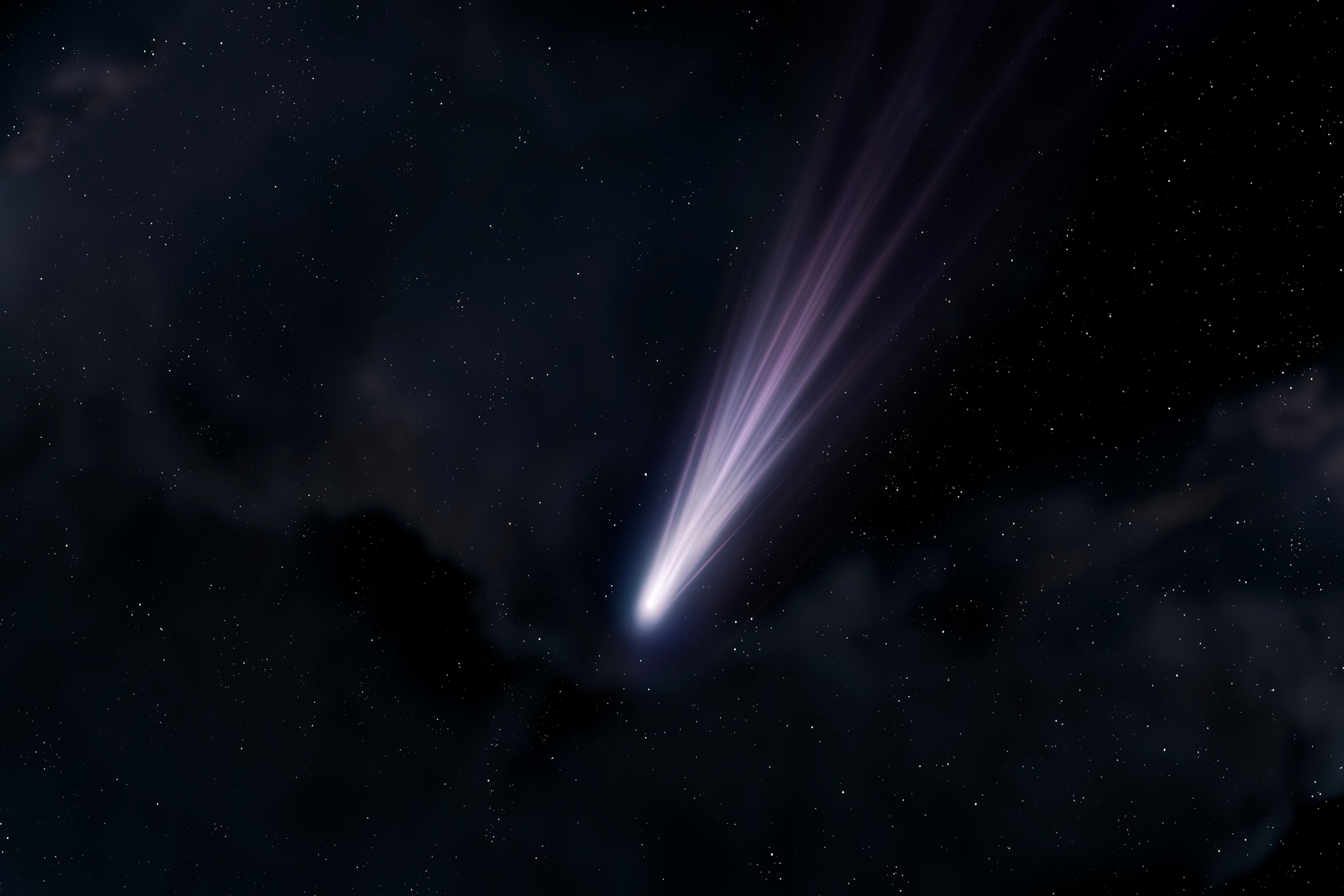
Credit: Shutterstock
Europa Clipper spacecraft observed the visitor from another solar system when Earth and Mars telescopes couldn’t see it
NASA’s Europa Clipper spacecraft spotted something rare while traveling through space. On November 6, it observed an interstellar comet called 3I/ATLAS. This moment stood out because the comet came from outside our solar system, making it only the third such object ever officially identified.
The timing could not have been better. Europa Clipper happened to be in the right place at the right time. Scientists did not plan for this encounter, but they quickly took advantage of it.
The spacecraft observed the comet from about 102 million miles away. It watched the object for nearly seven hours using its Ultraviolet Spectrograph. Europa Clipper launched in October 2024 and is still on its long journey to Jupiter, where it will arrive in April 2030. Even so, the team did not want to miss this surprise chance.
Dr. Kurt Retherford, who leads the Europa-UVS team at the Southwest Research Institute, said the opportunity was completely unexpected. He shared that seeing another target on the way to Jupiter was exciting for the entire team.
A rare viewing opportunity
The timing of these observations mattered a lot. In November, Earth-based telescopes could not see the comet because it was too close to the Sun in the sky. Mars had already passed its best viewing window earlier.
Europa Clipper helped fill this gap. It connected observations made from Mars in late September with views that Earth-based telescopes captured later on. This made the data set more complete.
The spacecraft also had a special viewing angle. The comet passed between Europa Clipper and the Sun. Because of this, the instrument looked from behind the comet’s tails toward its center. This allowed scientists to study both the dust tail and the plasma tail in a unique way.
What scientists discovered
The instrument picked up signs of oxygen, hydrogen, and dust. These signals suggest the comet released large amounts of gas after it passed closest to the Sun. This process is known as outgassing.
Europa-UVS is especially good at detecting atoms and molecules. It can see water molecules breaking apart into hydrogen and oxygen as they escape from the comet.
Dr. Retherford explained that scientists can actually watch gases leaving the comet in real time. They can also track how water splits into smaller components in space.
These findings help researchers learn more about where the comet came from. Dr. Tracy Becker, co-deputy principal investigator of Europa-UVS, said the comet’s makeup and gas behavior offer clues about its long journey from another star system.
By studying objects like 3I/ATLAS, scientists can compare other solar systems to our own. This rare observation gives them a better idea of how planets may form across the galaxy.