






























Credit: Shutterstock
Imagine robots so small you can barely see them without a microscope. Now imagine those same robots are smart enough to swim through liquid, sense what’s around them, and make their own decisions. This sounds like something from a futuristic novel, right? Well, scientists at the University of Pennsylvania and the University of Michigan have actually made it happen.
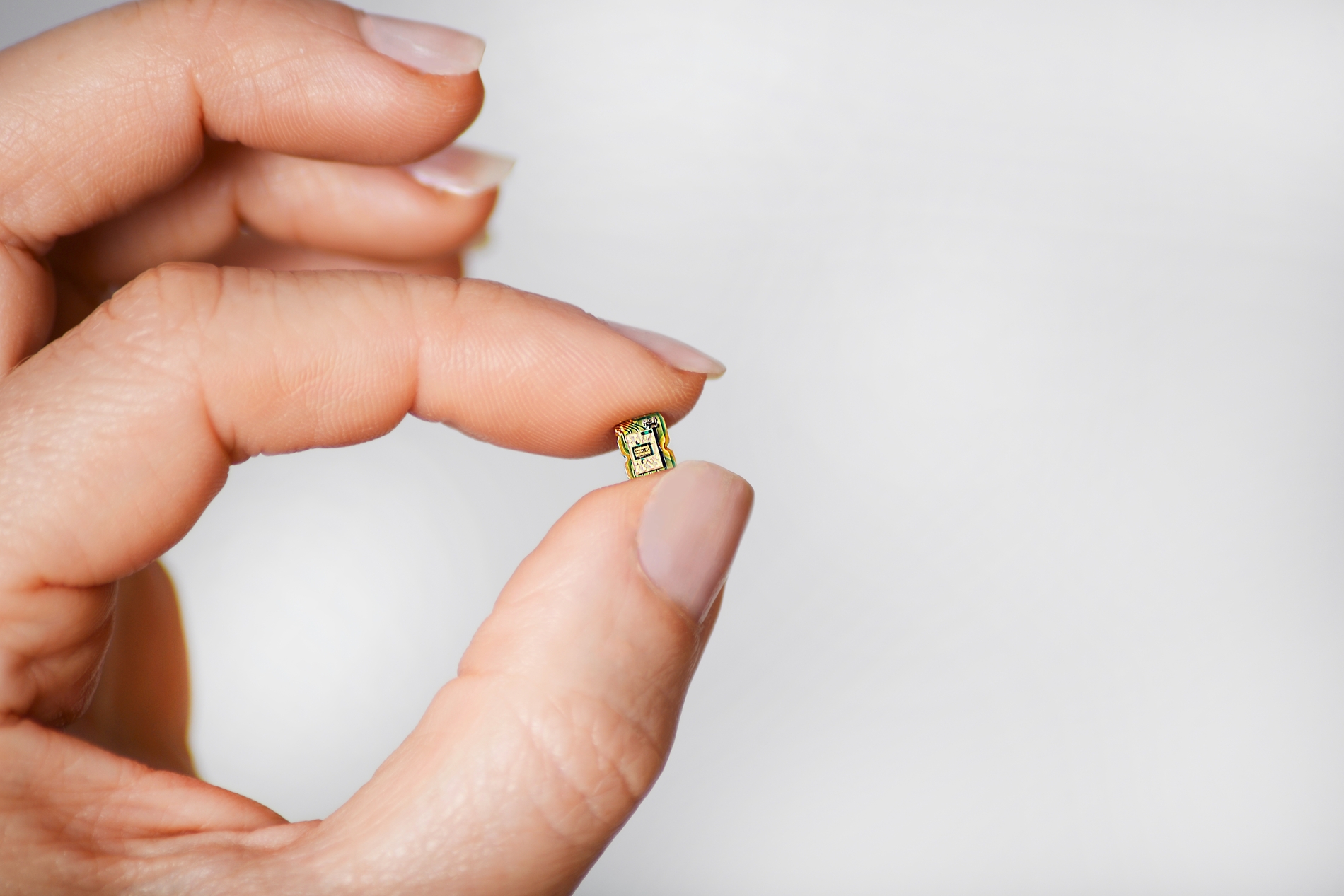
These tiny machines are seriously small. We’re talking 200 by 300 by 50 micrometers here. That’s smaller than a grain of salt. But size isn’t everything. These little robots are the smallest fully programmable autonomous machines ever created, and they pack some impressive abilities that could change medicine and manufacturing forever.
Here’s what makes them special. They don’t need wires. They don’t need magnets. Nobody has to control them with a remote. They just do their thing completely on their own. They run on light, have their own built-in computers, and can keep going for months. The best part? Each one costs about a penny to make.
Marc Miskin, the lead researcher from Penn Engineering, puts it simply. “We’ve made autonomous robots 10,000 times smaller. That opens up an entirely new scale for programmable robots.”
Building robots this small has been a huge challenge for scientists. The main problem is that when you get down to microscopic sizes, the rules of physics change. Water suddenly becomes thick and hard to move through. It’s like trying to swim through honey. The tiny arms and legs that work on bigger robots? They just break apart at this scale. They’re also incredibly hard to build in the first place.
So the research team had to think differently. Instead of giving these robots moving parts, they found a completely new way to make them swim. The robots create an electrical field around themselves. This field pushes tiny charged particles in the liquid, and those particles pull water molecules along with them. Basically, the robot makes its own little current and rides it. By tweaking this electrical field, the robots can turn, follow paths, and even work together in groups like fish swimming in formation.
But movement is only part of the story. The really impressive part is the brain inside. David Blaauw’s team at the University of Michigan managed to fit an entire computer system into these microscopic robots. We’re talking about a processor, memory, and sensors all crammed onto a chip that’s a fraction of a millimeter across. And remember, the solar panels on these robots are tiny. They only produce 75 nanowatts of power. That’s more than 100,000 times less power than your smartwatch uses.
These robots can feel temperature changes. Even tiny ones, as small as one third of a degree Celsius. They can move toward warmer spots and tell you what they find there. Now, you might be wondering how something so small can communicate with us. The answer is pretty creative. The robots do a little dance.
Scientists programmed them to wiggle in specific patterns that carry information. It works a lot like how honeybees communicate with each other through movement. The researchers watch this dance through a microscope with a camera and figure out what the robots are saying. Simple, but brilliant.
Think about what this could mean for medicine. These robots are the same size as living cells. One day, they could swim around inside your body, checking on individual cells, spotting diseases before they get serious, or delivering treatments exactly where they’re needed. They could also help build incredibly tiny devices that we can’t make with current technology.
This is just the start. Future versions could move faster, carry more sophisticated programs, and include extra sensors. They might even work in tougher environments.
Miskin explains, “We’ve shown that you can put a brain, a sensor and a motor into something almost too small to see, and have it survive and work for months. Once you have that foundation, you can layer on all kinds of intelligence and functionality.”